← All passes
Mountain pass No. 70 No live data

Parley’s Summit

Parley's Summit is the high point of Parleys Canyon, the corridor I-80 uses to climb out of the Salt Lake Valley. Eastbound you grind up out of the city toward the Snyderville Basin and Park City, then on toward Wyoming. Westbound it flips: a long, steady descent straight into a

7,020Elevation (ft)
2,140Metres
I-80Route
UTState
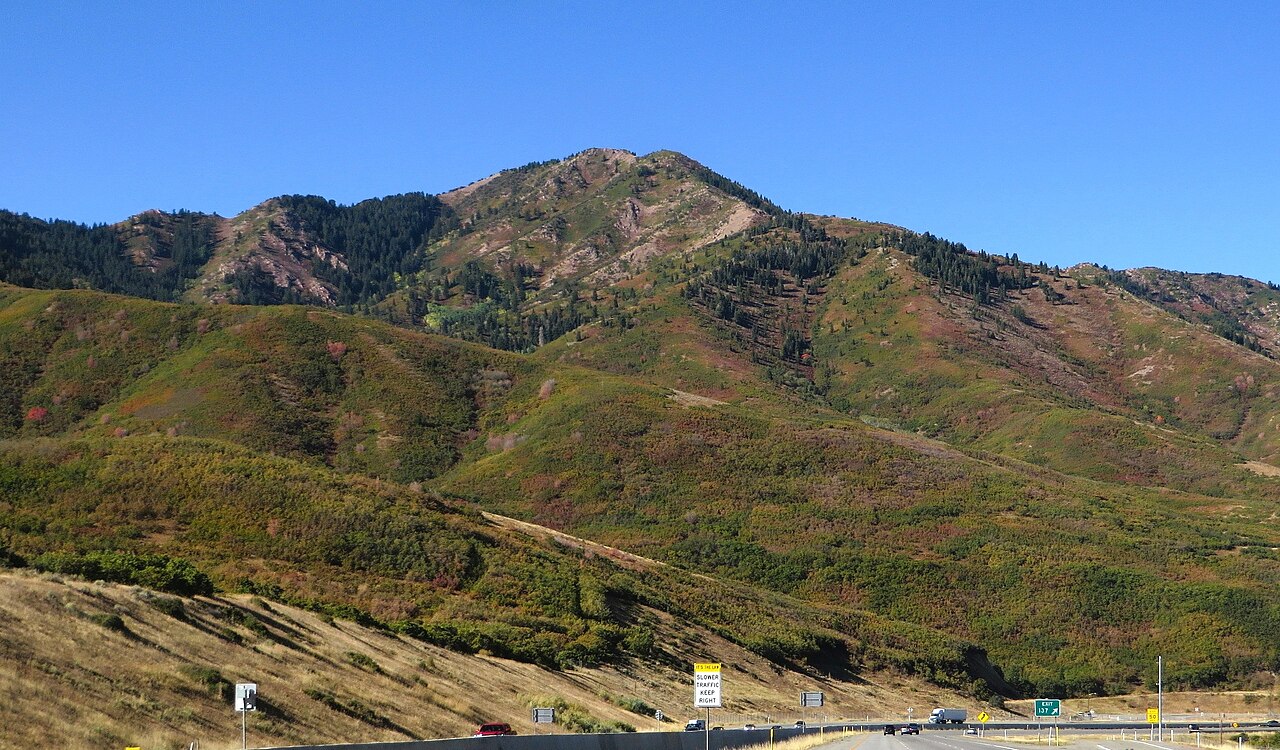
The northeast face of Mount Aire rises above Interstate 80 as it climbs through Parley's Canyon toward the summit.
The northeast face of Mount Aire rises above Interstate 80 as it climbs through Parley's Canyon toward the summit.Ken Lund / Wikimedia Commons · CC BY-SA
00 Live conditions
No live data
No live condition feed for this pass right now. Check the state DOT or 511 before you climb.
01 Overview

Parley's Summit is the high point of Parleys Canyon, the corridor I-80 uses to climb out of the Salt Lake Valley. Eastbound you grind up out of the city toward the Snyderville Basin and Park City, then on toward Wyoming. Westbound it flips: a long, steady descent straight into a major metro. AARoads puts the I-80 roadway summit at 7,016 feet, at Exit 140. That is the number a trucker actually drives over. (Wikipedia's article body lists the geographic pass higher, at 7,120 feet, and calls it the highest point on I-80 in Utah. A nearby NRCS snow-telemetry station reads 7,590 feet, but that gauge sits on higher ground off the roadbed, so do not treat it as the road elevation.)

What makes this grade matter is the drop. I-80 falls more than 2,400 feet between the summit and Salt Lake City, on a 3 to 6 percent grade, and trucks are held to 40 mph (AARoads). That is a sustained descent into stop-and-go city traffic, which is exactly the setup that overheats brakes. The canyon also has a runaway truck ramp on the westbound left side near milepost 135, roughly 3.5 miles below the top (AARoads), and it has been used.

Parley's stays open year-round. There is no scheduled seasonal closure here. When snow stacks up, UDOT enforces its Traction Law through the canyon, and in the worst conditions it can require chains or 4WD for every vehicle, not just semis. Full closures happen, but they are event-driven: crashes, slide-offs, severe weather, and on one occasion a wildfire that shut both directions. Plan around the descent and the winter traction rules, and check signs and the UDOT Traffic app before you commit to the grade.

  • I-80 roadway summit is 7,016 feet at Exit 140; this is the trucker-relevant figure (AARoads)
  • Wikipedia's article body lists the geographic pass at 7,120 feet and calls it the highest point on I-80 in Utah (Wikipedia)
  • The grade runs 3 to 6 percent and trucks are limited to 40 mph (AARoads)
  • Westbound I-80 drops more than 2,400 feet between the summit and Salt Lake City (AARoads)
  • Runaway truck ramp sits on the westbound left side near milepost 135, about 3.5 miles below the summit (AARoads)
  • Utah's Traction Law (rule R920-6) Class 1 applies to vehicles over 12,000 lb GVW, including semis (UDOT Wasatch Back)
  • No scheduled seasonal closure; it is a year-round interstate, with closures driven by crashes, weather, or fire
02 Chain controls & closures

There is no fixed chain-control season on Parley's. UDOT does not publish hard start or end dates for the canyon. The Traction Law applies when road surface conditions warrant, so the rule turns on with the weather and turns off when the road clears, not on a calendar. When it is active, Class 1 covers vehicles over 12,000 lb GVW (buses, semis, some RVs) and Class 2 covers all vehicles; UDOT announces which class is in effect through road signs, message boards, the UDOT Traffic app, and its social media (UDOT Wasatch Back). General guidance says commercial drivers should carry chains roughly October through April, but that window is a guideline, not a verified Parleys-specific UDOT rule. In severe snow UDOT can escalate to chains or 4WD for every vehicle, as it did eastbound at milepost 128 on Nov 28-29, 2019 (Fox 13).

03 Notable hazards
Hazard

Brake failure on the westbound descent

The core risk here is overheated brakes on the long drop into Salt Lake City: a 3 to 6 percent grade and more than 2,400 feet of descent (AARoads). There is a runaway truck ramp on the westbound left side near milepost 135, about 3.5 miles below the summit. It gets used. A semi rolled over in the runaway ramp near Lambs Canyon after the driver hit a mechanical problem with the brakes; the driver walked away with minor injuries and no lanes were blocked (AARoads; Fox 13). Set your speed and gear at the top, not halfway down.

Hazard

Winter snow and traction loss

Heavy snow regularly triggers UDOT traction restrictions through the canyon. When the Traction Law is active, semis fall under Class 1, and in severe conditions UDOT can require chains or 4WD for all vehicles. The corridor also sees winter storm forecasts with strong wind gusts and brief whiteout bursts during stacked storms (UDOT; NWS Salt Lake City). Watch the signs and the UDOT Traffic app before you start up the grade.

Hazard

High wind and blowover

Utah's mountain-pass corridors along I-80 see high-wind gust events and semi rollovers during severe weather (ABC4 regional coverage). Most of that documented rollover coverage has centered on Tooele County I-80 west of the city rather than Parley's itself, so treat wind as a general I-80 hazard to respect here, especially for empty or high-profile trailers.

Hazard

Wildfire

The canyon's dry brush slopes are fire-prone. A roadside ignition from a failing catalytic converter sparked the 2021 Parleys Canyon Fire, which closed I-80 in both directions and forced thousands to evacuate (Salt Lake Tribune; Utah DPS). In hot, dry stretches a fire can shut the corridor with little warning, so check road status before you rely on this route.

Hazard

Sustained grade into stop-and-go traffic

The descent dumps you straight into a major metro. By the bottom you are braking on a 3 to 6 percent grade and merging into Salt Lake City traffic that can be backed up (AARoads). Heavy trucks that ride the brakes the whole way down can arrive with little braking left for the city, which is the real danger on this side of the pass.

04 History

The canyon and summit are named for Parley P. Pratt, who explored and built a toll road through what was then called Big Canyon. Construction started in 1848 and finished in 1850, and the road became the primary way into the Salt Lake Valley, displacing the older Emigration Canyon route (Wikipedia). A railway ran through the canyon from 1881 until 1956 (Wikipedia). The modern highway grew out of U.S. 40, which was widened to four lanes through the canyon in the mid-1950s and later overlaid by I-80 (AARoads). UDOT reconstructed the canyon road in the 2010s: the Parleys Canyon chain-up area was rebuilt during 2013 work, and a Renovate I-80 project from June 2014 to October 2015 rebuilt the roadway between Silver Creek Junction and Wanship in concrete (AARoads).

The canyon's most dramatic recent event was fire. On Aug. 14, 2021, the Parleys Canyon Fire ignited just after 1:15 p.m. off I-80, closed the interstate in both directions, and forced evacuations across Summit Park, Pinebrook, Lambs Canyon, and upper Mill Creek. An estimated 6,000 to 8,000 homes fell under evacuation orders, and the fire grew past 2,000 acres within hours (Salt Lake Tribune; Deseret News; KSL). Investigators traced the cause to hot particles from a vehicle's failing catalytic converter (Utah DPS).

05 FAQ
How steep is the Parley's Summit grade and how slow do I have to go?
The grade runs 3 to 6 percent and trucks are limited to 40 mph (AARoads). Westbound, you drop more than 2,400 feet into Salt Lake City. Pick a low gear at the top and let the engine hold you back so you are not leaning on the brakes the whole way down.
Is there a runaway truck ramp on Parley's, and where?
Yes. It is on the westbound left side near milepost 135, about 3.5 miles below the summit (AARoads). It is not just there for show: a semi rolled over in the ramp near Lambs Canyon after the driver had a brake problem, and the driver escaped with minor injuries (Fox 13). Know where it is before you need it.
Do I need chains on I-80 over Parley's, and what counts?
When UDOT's Traction Law is active, Class 1 hits any vehicle over 12,000 lb GVW, which means semis. For a 2WD truck you need 3PMSF (three-peak mountain snowflake) tires on all wheels, or chains or snow socks on at least two drive wheels. AWD and 4WD need at least M+S tires on all wheels. Watch the signs and the UDOT Traffic app for which class is in effect (UDOT Wasatch Back).
Where's the chain-up area?
Parleys Canyon has designated chain-up areas. AARoads cites a chain-up and view area near Parleys Park (Exit 146) for westbound traffic, and another before the Quarry interchange at Exit 131 that was rebuilt during the 2013 I-80 reconstruction (AARoads; UDOT). Chain up in the marked area, not on the shoulder of a live travel lane.
Does Parley's Summit close in winter?
There is no scheduled seasonal closure. It is a year-round interstate. Full closures are event-driven: crashes, slide-offs, severe weather, and on Aug. 14, 2021, the Parleys Canyon Fire. In severe snow UDOT can require chains or 4WD for all vehicles, which it did eastbound at milepost 128 on Nov 28-29, 2019 (Fox 13). Check the UDOT Traffic app before you go.
What's the elevation at the top?
The I-80 roadway summit is about 7,016 feet at Exit 140, and that is the number you actually drive over (AARoads). Wikipedia lists the geographic pass higher, at 7,120 feet, and calls it the highest point on I-80 in Utah. A nearby snow-telemetry station reads 7,590 feet, but that gauge sits off the roadbed on higher ground, so it is not the road elevation.
06 Related routes

Parley’s Summit on the live map

See conditions, incidents, and weather around Parley’s Summit in real time.

Open Live Map