← All passes
Mountain pass No. 30 No live data

Fourth of July Pass

Fourth of July Pass carries Interstate 90 over a low summit in Kootenai County, Idaho, just east of Coeur d'Alene. It sits at about 3,070 to 3,081 feet, low by western standards, and the grade runs 5.5 percent on both the east and west sides over roughly 8 miles total. The east s

3,069Elevation (ft)
935Metres
I-90Route
IDState
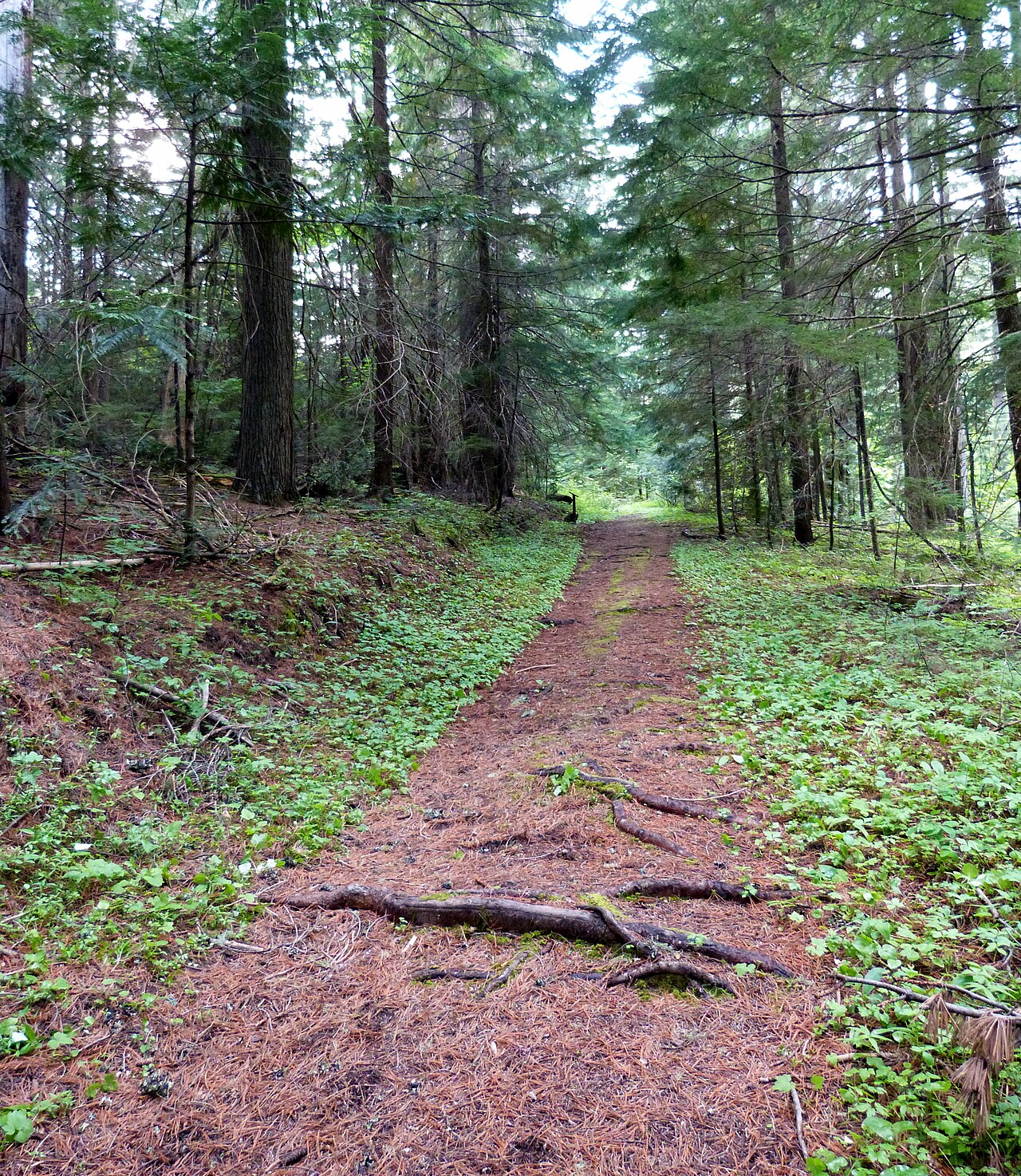
A wooded segment of the historic Mullan Road winding through Fourth of July Pass in northern Idaho, near the I-90 crossing east of Coeur d'Alene.
A wooded segment of the historic Mullan Road winding through Fourth of July Pass in northern Idaho, near the I-90 crossing east of Coeur d'Alene.Ian Poellet / Wikimedia Commons · CC BY-SA
00 Live conditions
No live data
No live condition feed for this pass right now. Check the state DOT or 511 before you climb.
01 Overview

Fourth of July Pass carries Interstate 90 over a low summit in Kootenai County, Idaho, just east of Coeur d'Alene. It sits at about 3,070 to 3,081 feet, low by western standards, and the grade runs 5.5 percent on both the east and west sides over roughly 8 miles total. The east side is a little steeper than the west. The summit marks the western edge of the Silver Valley mining district, which runs east along the Coeur d'Alene River toward Kellogg, Wallace, and Lookout Pass at the Montana line.

For truckers, this is the first major westbound grade after you climb out of the Silver Valley, and it is a recurring winter trouble spot. Commercial traffic averages around 2,500 trucks a day, with about 10,500 cars a day, so there is far more passenger traffic here than at neighboring Lookout Pass. The numbers are modest, but the pattern is not: Idaho State Police and ITD point to Fourth of July as a place where rigs lose control on ice.

The pass does not have a fixed winter closure. There is no gate that swings shut for the season. When it closes, it closes because of a crash or weather, usually for a few hours while crews clear a blocked lane. Idaho can require chains here under state law when the road turns unsafe, and the chain-up window is typically October through April. Check Idaho 511 before you commit to the grade.

  • Interstate 90 summit in Kootenai County, Idaho, east of Coeur d'Alene; western end of the Silver Valley mining district (Wikipedia)
  • Summit elevation about 3,070 to 3,081 feet; sources disagree on an exact figure (Wikipedia; FoxRVTravel)
  • Grade is 5.5 percent on both sides, east side slightly steeper, over roughly 8 miles total (FoxRVTravel)
  • Commercial traffic averages about 2,500 trucks per day, with about 10,500 cars per day (KREM)
  • Named in Idaho Code 49-948 as a pass where ITD may require chains when conditions are unsafe (Idaho Legislature)
  • No fixed winter closure and no runaway truck ramp; the nearest I-90 ramp is at Lookout Pass (Idaho 511 truck-ramp list)
  • ITD began a two-year I-90 resurfacing project over the pass in March 2025, running through fall 2026 (ITD news release, March 24, 2025)
02 Chain controls & closures

The chain law on Fourth of July Pass is not on a fixed calendar. Idaho Code 49-948 names this pass and lets ITD require chains when the road is in an unsafe condition, and the statute allows the state to act at any time. In practice the chain-up season runs roughly October through April, but that window comes from ITD and secondary sources, not the statute itself, so treat it as typical rather than a hard legal date. When the chain law is active, commercial vehicles need a minimum of one tire chained on each side of one drive axle, regardless of how many drive axles the rig has, plus one axle at or near the rear of each towed unit. Cable chains and approved automatic traction devices that give equivalent traction are accepted under Idaho Code 49-104. ITD and ISP turn on roadside signs to tell truckers to chain up, and ITD lifts the requirement as soon as conditions allow to limit road damage. There is no seasonal gate closure; the pass is open year-round except during incident-driven blockages.

03 Notable hazards
Hazard

Ice on the grades and bridges

The pass posts patchy-ice caution signs on both sides, and you should treat every bridge as icy whenever the road is wet. Paired with the 5.5 percent grades, ice is the core winter risk here (FoxRVTravel).

Hazard

Trucks that do not re-chain

A pattern ITD has called out: westbound trucks chain up for Lookout Pass, pull the chains in the valley, then fail to re-chain for Fourth of July Pass and lose control on the ice. If you ran chains over Lookout, plan to run them again here (KREM; Shoshone News-Press).

Hazard

Center-barrier breach crashes

Non-chained semis on slick roads have crossed the center jersey barriers on this pass. One January 6 crash forced ISP to fully close the westbound lanes and partially close the eastbound lanes (Shoshone News-Press; KXLY).

Hazard

Snow at elevation

NWS Spokane lists Fourth of July Pass by name in its winter weather advisories, and area advisories flag heavier snow above about 3,000 feet. The summit sits right at or above that threshold, so it can pick up more snow than the valley on either side (NWS Spokane).

Hazard

Incident-driven lane blockages

Because there is no scheduled closure, the real disruption is crashes. A January 2022 westbound semi crash near milepost 26 shut the westbound lanes for more than three hours, and a May 2026 box-truck rollover near milepost 32 blocked eastbound traffic about four hours (KREM; Idaho State Police).

04 History

The road over Fourth of July Pass follows the line of the Mullan Road, built by the U.S. Army under Captain John Mullan between 1859 and 1862 to connect Fort Benton, Montana, with Fort Walla Walla, Washington Territory. On July 4, 1861, Mullan's crew celebrated the Fourth of July atop this summit while building the road. That is how the pass got its name.

The Mullan Road was added to the National Register of Historic Places in 1975, and the American Society of Civil Engineers designated it a historic civil engineering landmark in 1977. The corridor is still being worked on. In March 2025 ITD began a two-year resurfacing project covering the roughly 8-mile stretch of I-90 from Wolf Lodge over Fourth of July Pass, with summit illumination, drainage upgrades, and concrete-barrier replacement, running through fall 2026.

05 FAQ
How steep is Fourth of July Pass?
It runs 5.5 percent on both sides over roughly 8 miles, with the east side a little steeper than the west. The summit sits at about 3,070 to 3,081 feet (FoxRVTravel; Wikipedia).
Do I need chains on Fourth of July Pass?
Only when ITD activates the chain law. Idaho Code 49-948 names this pass, so the state can require chains when conditions are unsafe. When it is active, trucks need one chained tire on each side of one drive axle plus one rear axle of any towed unit, and cable chains or approved auto-chains count. That is typically possible October through April (Idaho Code 49-948; RMS Truckers).
Is there a runaway truck ramp on Fourth of July Pass?
No. There is no runaway ramp on this pass. The only I-90 runaway ramp in the area is at Lookout Pass, about 4 miles east of Mullan on the westbound side (Idaho 511 truck-ramp list).
Does Fourth of July Pass close in winter?
Not on a fixed schedule. It closes only for crashes or weather, usually for a few hours at a time. A westbound closure ran more than three hours in January 2022, and an eastbound closure ran about four hours in May 2026. Check Idaho 511 before you go (KREM; Idaho State Police).
Why is it called Fourth of July Pass?
Captain John Mullan's road-building crew celebrated July 4, 1861 on the summit while building the Mullan Road, and the name stuck (Wikipedia).
Where do I check conditions for this pass?
Use Idaho 511 at 511.idaho.gov and the ITD webcams at the pass. NWS Spokane issues the winter weather advisories that name Fourth of July Pass by name (Idaho 511; NWS Spokane).
06 Related routes

Fourth of July Pass on the live map

See conditions, incidents, and weather around Fourth of July Pass in real time.

Open Live Map