← All passes
Mountain pass No. 60 No live data

Cove Fort Summit

Cove Fort Summit is the climb over the high point of I-15 in Utah, the pass south of Cove Fort between Manderfield and Sulphurdale. The crest sits at milepost 124.8, elevation 6,611 ft, the highest point on I-15 anywhere in the state (Wikipedia, "Interstate 15 in Utah"). There is

6,000Elevation (ft)
1,829Metres
I-15Route
UTState
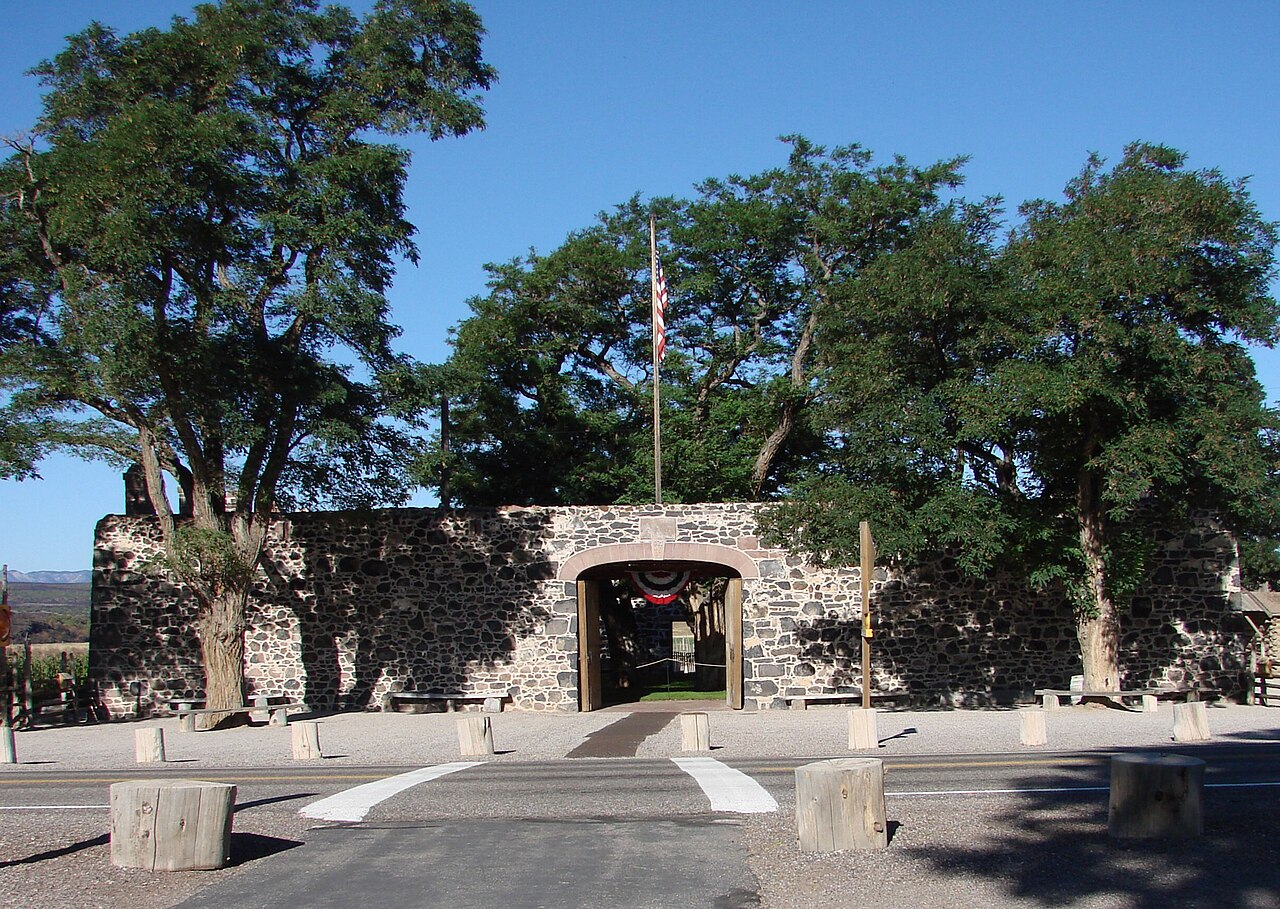
Interstate 15 meets the western end of I-70 amid the high desert terrain at Cove Fort, Utah, near the route's roughly 6,000-foot summit.
Interstate 15 meets the western end of I-70 amid the high desert terrain at Cove Fort, Utah, near the route's roughly 6,000-foot summit.Don Graham (Flickr: inkknife_2000) / Wikimedia Commons · CC BY-SA
00 Live conditions
No live data
No live condition feed for this pass right now. Check the state DOT or 511 before you climb.
01 Overview

Cove Fort Summit is the climb over the high point of I-15 in Utah, the pass south of Cove Fort between Manderfield and Sulphurdale. The crest sits at milepost 124.8, elevation 6,611 ft, the highest point on I-15 anywhere in the state (Wikipedia, "Interstate 15 in Utah"). There is no official signed name for this pass. Sources call it an unnamed mountain pass, and "Cove Fort Summit" describes the run up to the Cove Fort junction rather than a labeled summit on a green sign.

That junction is the reason most truckers know this spot. At Exit 132, near the Beaver/Millard county line, I-70 splits off and runs east toward Richfield, the San Rafael Swell, and eventually Denver. I-70's western terminus is right here, milepost 0.000 (Wikipedia, "Interstate 70 in Utah"). For a driver, Exit 132 is the decision point: stay on I-15 north toward Fillmore, Nephi, and Salt Lake, hold I-15 south toward Beaver and the Cedar City/St. George region, or turn east on I-70.

The bigger story is weather. This is exposed high desert at over 6,000 ft, and the stretch between Beaver and Cove Fort closes on short notice in winter. Snow squalls drop visibility to near zero in minutes, ice takes out semis on the grade, and crosswinds tip high-profile and empty trailers. None of it runs on a schedule. Treat this corridor as one that can shut for hours with little warning from October into spring.

  • Summit crest sits at milepost 124.8, elevation 6,611 ft, the highest point on I-15 in all of Utah (Wikipedia, "Interstate 15 in Utah")
  • The pass is unnamed in the sources; it lies south of Cove Fort between Manderfield and Sulphurdale
  • I-70 meets I-15 at Exit 132 near the Beaver/Millard county line; this is I-70's western terminus at milepost 0.000 (Wikipedia, "Interstate 70 in Utah")
  • AARoads documents a 5% grade between Bull Hollow and Mud Spring Hollow and summits around 6,500 to 6,600 ft in this corridor (AARoads)
  • Truck climbing lanes run over Beaver Ridge, roughly mileposts 98 to 105, a separate climb south of the Cove Fort summit (UDOT Beaver Ridge Climbing Lanes Project)
  • Utah's statewide Traction Law (Utah Admin. Code R920-6) is condition-activated and announced by signs and UDOT traveler info, not a fixed Cove Fort chain station
  • Commercial vehicles must carry chains October 1 to April 30 or when UDOT determines conditions warrant (Utah Admin. Code R920-6)
02 Chain controls & closures

Utah does not publish a fixed Cove Fort chain-control season. The state runs a statewide Traction Law under Utah Administrative Code R920-6, activated by conditions and announced through signage and UDOT traveler information. Commercial vehicles must carry chains from October 1 through April 30, or whenever UDOT determines conditions warrant (Utah Admin. Code R920-6). When the Traction Law is in force, a commercial vehicle with four or more drive wheels (other than a bus) must chain at least four drive-wheel tires; buses and RVs chain at least two. Utah uses two segment classes: a Class 1 segment requires vehicles over 12,000 lb GVW to be traction-device equipped, and a Class 2 segment requires all vehicles to be traction-equipped or 4WD (UDOT, "Snow Tire & Chain Requirements"; R920-6). Because the rule is condition-activated and corridor-wide, the chain requirement here switches on and off with the weather rather than closing on a calendar date.

03 Notable hazards
Hazard

High crosswinds and trailer rollovers

The exposed high desert here produces strong winds that tip empty and high-profile trailers. On April 16, 2026, an empty semi trailer blew over in high winds and landed on a car on southbound I-15 about 15 miles south of Fillmore, near Cove Fort; the road closed southbound and the driver had minor injuries (KUTV, UHP Lt. Cameron Roden). Cedar City logged a 75 mph gust during the February 18, 2026 squall (Newsweek / NWS Salt Lake City).

Hazard

Snow squalls and whiteouts

NWS Salt Lake City issues snow squall warnings for this corridor. The February 18, 2026 warning described whiteout conditions with near zero visibility from intense bursts of heavy snow and gusty winds, and called the conditions life-threatening (Newsweek quoting NWS Salt Lake City). Visibility can drop to under half a mile in minutes.

Hazard

Ice and pileups on the climb

Snow and ice on the Beaver-to-Cove Fort grade cause crashes and slide-offs that close the interstate. UDOT shut I-15 southbound at mile marker 118 on January 10, 2023 after a snow squall warning; intermittent Cove Fort to Beaver closures ran in March 2021 with semis spinning out southbound; and the February 2026 squall produced jackknifed semis and an Iron County closure (stgeorgeutah.com; Fox13/KSL; KSL.com).

Hazard

Steep grade

AARoads documents a 5% grade between Bull Hollow and Mud Spring Hollow plus the summits around 6,500 to 6,611 ft (AARoads). The hardest braking concern near the junction is actually on I-70 east of Cove Fort: the Clear Creek descent is steep enough that UDOT built a brake check area and a runaway truck ramp (Wikipedia, "Interstate 70 in Utah").

04 History

Cove Fort itself predates the interstate by a century. Ira Hinckley built the fort in 1867 at Brigham Young's request, a fortified way station roughly halfway between Fillmore, the former territorial capital, and Beaver. It sat on the main north-south pioneer corridor that carried the stagecoach, the Pony Express, and the telegraph, the same line I-15 now follows (FHWA, "Why Does I-70 End in Cove Fort, Utah?"; Wikipedia, "Cove Fort"). The Hinckley families bought the fort and gave it back to the LDS Church in 1988, and Gordon B. Hinckley dedicated the restored fort on May 9, 1992 (Wikipedia, "Cove Fort").

The interstate junction came later. On October 18, 1957, U.S. Secretary of Commerce Sinclair Weeks announced that I-70 would extend west from Denver and bend south to end at I-15, making Cove Fort the future western terminus. The decision reportedly caught Utah officials off guard (FHWA). A 70-mile two-lane stretch of I-70 through the San Rafael Swell opened on November 5, 1970, and Utah completed the four-lane segment on September 28, 1990, finishing the I-70/I-15 connection at Cove Fort (FHWA).

05 FAQ
How high is the Cove Fort summit on I-15?
The high point of I-15 in Utah is the pass south of Cove Fort at milepost 124.8, elevation 6,611 ft. That is the highest point on I-15 anywhere in the state (Wikipedia, "Interstate 15 in Utah"). The pass has no official signed name in the sources.
How steep is the climb?
AARoads records a 5% grade in this corridor between Bull Hollow and Mud Spring Hollow, with summits around 6,500 to 6,600 ft. There are dedicated truck climbing lanes over Beaver Ridge, roughly mileposts 98 to 105, which is a separate climb south of the summit (UDOT). The steepest braking worry is on I-70 east of the junction, which has a brake check and a runaway truck ramp on the Clear Creek descent.
Does Utah make me chain up at Cove Fort, and when?
There is no fixed Cove Fort chain station. Utah runs a statewide Traction Law (R920-6) that turns on with conditions and is announced by signs and UDOT traveler info. Commercial trucks must carry chains October 1 through April 30, and when the law is active a truck with four or more drive wheels must chain at least four drive tires (UDOT motor-carrier page; R920-6).
Why does I-15 keep closing here in winter?
Snow squalls, whiteouts, ice, and crosswinds. UDOT closed I-15 southbound at mile marker 118 on January 10, 2023 after a snow squall warning; the February 18, 2026 squall affected mile markers 46 to 110 with a 75 mph gust in Cedar City; and intermittent Cove Fort to Beaver closures ran in March 2021 (stgeorgeutah.com; Newsweek; Fox13/KSL). These are usually hours-long and often one direction at a time.
Is wind a real risk for an empty trailer here?
Yes. On April 16, 2026 an empty trailer blew over onto a car on southbound I-15 about 15 miles south of Fillmore near Cove Fort, and the road closed southbound (KUTV). Cedar City recorded a 75 mph gust during the February 2026 squall (Newsweek / NWS). Run heavy or run cautious when the wind is up.
Why does I-70 dead-end at Cove Fort?
A 1957 federal decision routed I-70's western end to meet I-15 at Cove Fort, and Utah finished the four-lane connection on September 28, 1990 (FHWA). From Exit 132 you can stay on I-15 north or south, or take I-70 east toward Richfield and Denver.
06 Related routes

Cove Fort Summit on the live map

See conditions, incidents, and weather around Cove Fort Summit in real time.

Open Live Map