← All passes
Mountain pass No. 10 Open

Wolf Creek Pass

US-160 crosses the Continental Divide at Wolf Creek Pass, 10,857 feet up in the San Juan Mountains of southwest Colorado. The road links South Fork and the San Luis Valley on the east with Pagosa Springs and the southwest corner of the state on the west. The maximum grade is 6.8

10,857Elevation (ft)
3,309Metres
US-160Route
COState
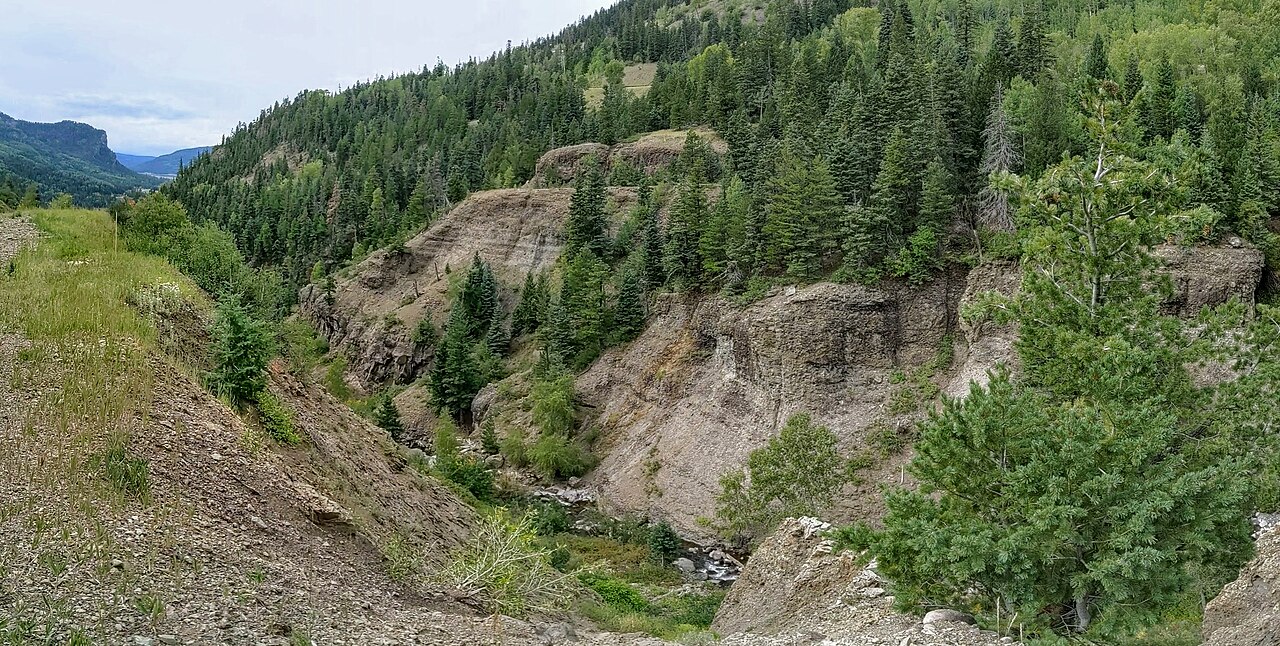
Wolf Creek and the West Fork valley seen from a US 160 overlook partway up the west side of Wolf Creek Pass, Colorado (Sept 2019).
Wolf Creek and the West Fork valley seen from a US 160 overlook partway up the west side of Wolf Creek Pass, Colorado (Sept 2019).Dicklyon (Wikimedia Commons) · CC BY-SA 4.0
00 Live conditions
Open
Temperature
47°F
Road
Clear
Weather
47°F, Clear
Northbound
No restrictions
Southbound
No restrictions

Reported Jun 2, 2026, 11:22 PM MT. Conditions change fast at elevation; confirm with the DOT before you commit.

01 Overview

US-160 crosses the Continental Divide at Wolf Creek Pass, 10,857 feet up in the San Juan Mountains of southwest Colorado. The road links South Fork and the San Luis Valley on the east with Pagosa Springs and the southwest corner of the state on the west. The maximum grade is 6.8 percent on either approach. What truckers come here for, and what CDOT keeps warning them about, is the westbound side. From the summit near the Wolf Creek Ski Area, the road runs a sustained 7 percent downgrade for more than 8 miles down to the west base near Treasure Falls.

That descent is the whole problem. Westbound commercial vehicles have to hold 25 mph the whole way down, slower than the 25 to 45 mph posted for everyone else, and CDOT tells trucks to drop into low gear and stay off the brakes so they do not overheat and fade. Two runaway truck ramps sit on the west side. One is at mile marker 162.5, about 4.5 miles below the summit. The other is at MP 161, about 6 miles down, and it is the last chance to bail. There is no fee and no fine for using a ramp. About 6.5 miles below the summit, near the Wolf Creek scenic overlook, the road bends through a hairpin switchback where CDOT says most of the crashes happen.

Snow is the other half of the story. Wolf Creek is one of the snowiest spots in Colorado. Near the ski area at about 10,640 feet, the average is around 392 inches a year over the 1981 to 2010 normals, and snow is possible from September into June. That drives the chain law and the winter closures. A 900-foot tunnel and snowshed on the east side opened in November 2005, with the project wrapped in 2006, to shield the road from rockfall and slides.

  • Summit 10,857 ft on US-160, crossing the Continental Divide in the San Juan Mountains (Wikipedia; CDOT)
  • Maximum grade 6.8 percent; the critical westbound descent is a sustained 7 percent for more than 8 miles, summit to the west base near Treasure Falls (CDOT 'Beware the Wolf')
  • Westbound commercial vehicles capped at 25 mph on the descent; descend in low gear, off the brakes (CDOT US 160 page)
  • Two west-side runaway ramps: MP 162.5 (about 4.5 miles down) and MP 161 (about 6 miles down, the last chance); no fee or fine to use them (CDOT; CDLLife)
  • 54 semi-truck crashes on the west side from 2015 to 2021, three of them fatal (CDOT, Aug 2023)
  • About 392 inches of snow a year near the ski area, 1981 to 2010 normals; snow possible September through June (Current Results)
  • Colorado's commercial Must Carry chain law covers US 160 from Sept 1 to May 31 (CDOT Must Carry Law)
02 Chain controls & closures

Colorado's commercial Must Carry chain law runs September 1 to May 31 and names US 160 outright, alongside I-70 and US 40, 50, 285 and 550 plus CO 9, so Wolf Creek Pass sits under chain rules for the whole season. Commercial vehicles over 16,000 pounds GVWR have to carry chains or approved alternate traction devices the entire time. CDOT escalates control in levels. A Traction Law (Code 15) requires CMVs to have adequate traction, meaning chains, ATDs, or enough tread. The Commercial Vehicle Chain Law (Code 18, Level 2) goes further. It requires single- and tandem-drive-axle trucks to chain four drive wheels, with buses chaining two, under Colorado law for vehicles 26,001 pounds and up. On the pass itself, the wide shoulder at the summit is the chain-up and brake-check area for both directions, and CDOT tells drivers to inspect their brakes there before the 8-mile descent. Colorado has about 130 designated chain stations statewide.

There is no single fixed closure threshold. CDOT closes the pass case by case for snow removal and avalanche mitigation. The closures cluster on the steep west side between Treasure Falls and the summit, where natural slide paths run onto US 160. Most fall in the December to March storm cycle. CDOT coordinates with the Colorado Avalanche Information Center, the NWS, and the Colorado State Patrol, and how long a closure lasts depends on snow accumulation and avalanche danger. Longer daytime closures are sometimes used to reset avalanche equipment by helicopter. Wolf Creek is one of more than a dozen Colorado sites running remote-controlled Gazex and O'Bellx avalanche systems, part of 40-plus such systems CDOT operates statewide, with portable O'Bellx units reset by helicopter each winter. CDOT has not published a verified count of average closures per winter, so no annual closure number is given here.

03 Notable hazards
Hazard

Sustained 7 percent westbound descent and brake overheating

More than 8 miles of roughly 7 percent downgrade from the summit to the west base. CDOT directs commercial vehicles to descend at no more than 25 mph in low gear, off the brakes, to keep them from overheating and fading. (CDOT, 'Traveling US 160 Wolf Creek Pass: Beware the Wolf,' codot.gov/travel/commercialvehicles/wolfcreekpass)

Hazard

Hairpin switchback near the scenic overlook

A sharp hairpin curve about 6.5 miles below the summit, near the Wolf Creek scenic lookout. CDOT says most truck crashes on the pass happen at this switchback. (CDOT 'Beware the Wolf' campaign and Aug 2023 news release)

Hazard

Trucks that blow past the escape ramps

On Nov 3, 2025 a 23-year-old driver from New York died at MP 161 after the truck, brakes smoking and going an estimated 65 mph in a 25-mph CMV zone, about 40 over, failed to take the runaway ramp roughly 1.5 miles earlier and went through the guardrail down an embankment. Two ramps exist, at MP 162.5 and MP 161. (Denver7/KMGH and CPR News, Nov 2025; Colorado State Patrol crash report)

Hazard

Heavy snow and frequent winter storms

Among the snowiest places in Colorado, averaging about 392 inches a year near the summit on the 1981 to 2010 normals, with a record near 837.5 inches in the 1978 to 1979 season. Snow is possible September through June, which drives the traction and chain control and cuts visibility. (Current Results; regional reporting on the 1978-79 record)

Hazard

Avalanche paths crossing the highway

Steep slopes on the west side send natural slides onto US 160 between Treasure Falls and the summit. CDOT runs controlled avalanche mitigation with remote Gazex and O'Bellx systems and closes the road in full when it does. (CDOT avalanche program pages and closure releases, codot.gov)

04 History

The first road over Wolf Creek Pass was begun in 1911 and finished in 1916, engineered by J. E. Maloney and Ed Riley. The original road was 12 feet wide. It was widened to 24 feet in 1930 and paved in 1950. The 900-foot tunnel and snowshed on the east side opened November 5, 2005, with construction completed in 2006, to shield US 160 from rockfall and snow slides.

The pass has a place in trucking lore. In 1975 the country and novelty artist C. W. McCall, Bill Fries with composer Chip Davis, put out the spoken-word song 'Wolf Creek Pass,' a comic tale of a runaway truck losing its brakes on the descent. It reached about No. 40 on the Billboard pop chart and No. 12 on the Hot Country Singles chart. The pass also owns one of Colorado's record winters. In 1978 to 1979, about 837.5 inches of snow fell here, which is why it ranks among the state's snowiest crossings.

05 FAQ
How steep is Wolf Creek Pass and how long is the descent?
The maximum grade is 6.8 percent, but the one that matters for trucks is the westbound descent. It is a roughly 7 percent downgrade running more than 8 miles from the 10,857-foot summit to the west base near Treasure Falls. CDOT calls it the critical section and wants trucks down it slow and geared. (CDOT; Wikipedia)
What is the truck speed limit going down Wolf Creek Pass?
Westbound commercial vehicles cannot exceed 25 mph on the descent, even where other traffic sees 25 to 45 mph posted. Pick a low gear before you start down and use the engine to hold your speed instead of the brakes, so they do not overheat. (CDOT US 160 page)
Where are the runaway truck ramps on Wolf Creek Pass?
Both are on the west, downhill side. The first is at MP 162.5, about 4.5 miles below the summit. The second is at MP 161, about 6 miles down, and it is the last chance. There is no fee and no fine for using either one, so take the ramp before you need to. (CDOT; CDLLife)
When does the chain law apply on Wolf Creek Pass?
US 160 is covered by Colorado's commercial Must Carry chain law from September 1 to May 31, so the whole season. Under the Commercial Vehicle Chain Law (Code 18), single- and tandem-drive-axle trucks chain four drive wheels. The wide shoulder at the summit is the chain-up and brake-check area, and CDOT wants you to inspect brakes there before the descent. (CDOT Must Carry Law; Colorado General Assembly)
Why does Wolf Creek Pass close so often in winter?
Two reasons. It is one of Colorado's snowiest passes, averaging about 392 inches a year, and it has avalanche paths on the steep west side between Treasure Falls and the summit. CDOT closes the road for snow removal and for controlled avalanche mitigation, running remote Gazex and O'Bellx systems that sometimes need a helicopter reset. Closure length depends on the storm. (Current Results; CDOT)
Is Wolf Creek Pass really that dangerous for trucks?
Yes. CDOT recorded 54 semi crashes on the west side from 2015 to 2021, three of them fatal. In November 2025 a driver died at MP 161 after running about 65 mph in a 25-mph zone and skipping a runaway ramp. The descent has been trouble long enough that it inspired C. W. McCall's 1975 runaway-truck song. Respect the grade and it will treat you fine. (CDOT; Denver7/CSP; Wikipedia)
06 Related routes

Wolf Creek Pass on the live map

See conditions, incidents, and weather around Wolf Creek Pass in real time.

Open Live Map