← All passes
Mountain pass No. 78 No live data

Raton Pass

Interstate 25 climbs over Raton Pass at 7,834 feet, right on the line between Colorado and New Mexico. Trinidad, Colorado sits at the north foot in Las Animas County. Raton, New Mexico sits at the south foot in Colfax County. This is the main north-south freight road between the

7,834Elevation (ft)
2,388Metres
I-25Route
CO/NMState
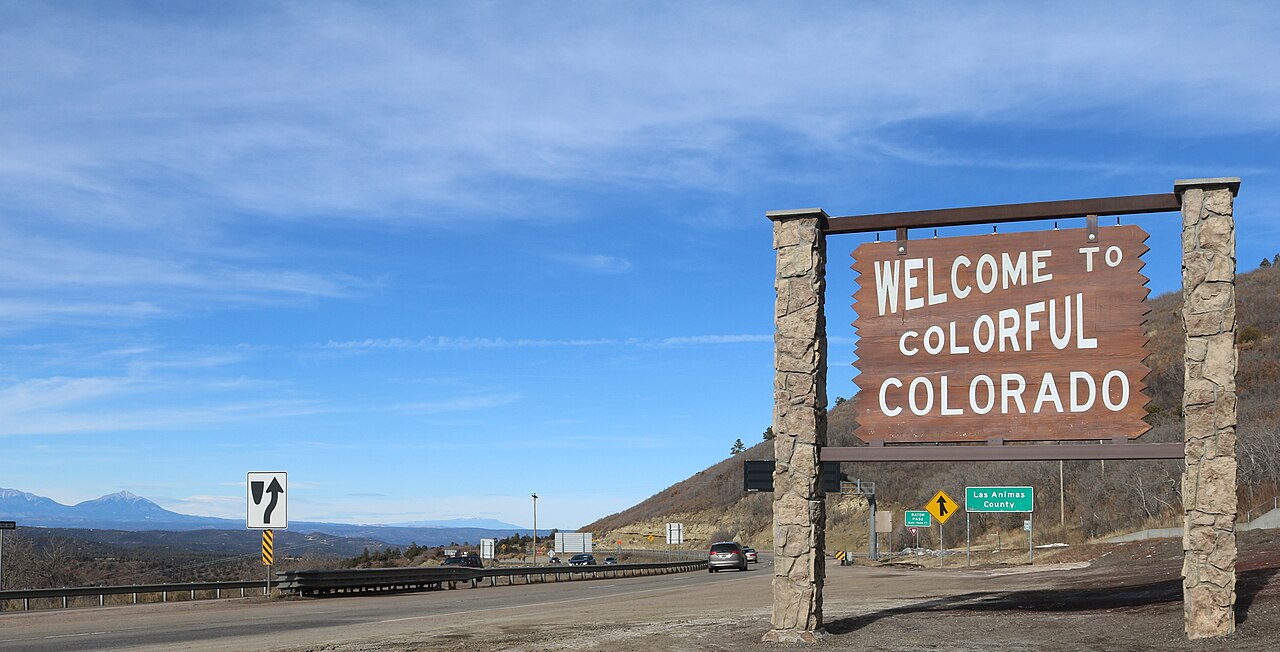
Signs at Raton Pass on the New Mexico-Colorado state line along Interstate 25; the border sits just in front of the 'Welcome to Colorful Colorado' sign (photo by Jeffrey Beall, Jan 18, 2020).
Signs at Raton Pass on the New Mexico-Colorado state line along Interstate 25; the border sits just in front of the 'Welcome to Colorful Colorado' sign (photo by Jeffrey Beall, Jan 18, 2020).Jeffrey Beall / Wikimedia Commons · CC BY 4.0 (Creative Commons Attribution 4.0 International)
00 Live conditions
No live data
No live condition feed for this pass right now. Check the state DOT or 511 before you climb.
01 Overview

Interstate 25 climbs over Raton Pass at 7,834 feet, right on the line between Colorado and New Mexico. Trinidad, Colorado sits at the north foot in Las Animas County. Raton, New Mexico sits at the south foot in Colfax County. This is the main north-south freight road between the two states. I-25 carries US 85 and US 87 over the top and links Denver and Pueblo with Albuquerque and the rest of New Mexico. There is no quick parallel route. When the pass shuts, trucks eat a long detour.

The modern crossing runs about 21.8 miles (35 km) between Raton and Trinidad with a maximum grade near 6 percent (dangerousroads.org). The climb is longer and steeper from the Trinidad side: roughly 13.9 miles gaining about 558 meters from the north, against about 11.6 miles and 332 meters from the Raton side. That sustained 6 percent works your brakes on the way down and slows a loaded rig on the way up. It gets worse fast when snow covers an ascending lane and the chain law goes active.

Weather is the recurring problem. Wikipedia describes the pass as subject to difficult driving conditions and occasional closures during heavy winter snowfalls. The triggers are blowing snow, ice, high crosswinds, and poor visibility. The elevation and exposure also build wind strong enough to close the interstate with no snow on the ground. There is no seasonal shutdown. The pass stays open year-round and closes storm by storm.

  • Summit 7,834 ft (2,388 m) on I-25 directly on the Colorado/New Mexico line, between Trinidad, CO and Raton, NM (Wikipedia)
  • About 21.8 mi (35 km) between Raton and Trinidad at a maximum grade near 6 percent; the Trinidad side is the longer, steeper climb (dangerousroads.org)
  • I-25 carries US 85 and US 87 over the top. It is the main north-south freight route between Colorado and New Mexico, so a closure forces long detours (Wikipedia; AARoads)
  • Colorado's traction and chain law zone runs from Trinidad south to the New Mexico state line. CDOT and Colorado State Patrol can require traction or chains for all vehicles there during storms (KOAA News; Colorado State Patrol)
  • Closure gates sit on both sides. CDOT gates southbound I-25 from Trinidad to the line, NMDOT and New Mexico State Police gate northbound from Raton to the line, so it often shuts both ways in one storm (KOAA News; KRQE News)
  • National Historic Landmark (1960), listed on the National Register of Historic Places (1966). The old corridor of the Santa Fe Trail's Mountain Branch (Wikipedia)
02 Chain controls & closures

No fixed seasonal dates. Raton Pass stays open all year and closes only storm by storm, for heavy snow, ice, high winds, or wrecks (Wikipedia; dangerousroads.org). On the Colorado side the pass falls inside the traction and chain law zone on I-25 between Trinidad and the New Mexico state line. When a storm hits, Colorado State Patrol and CDOT activate the Passenger Vehicle Traction Law (Code 15), which requires 4WD or AWD, or mud-and-snow or winter tires with at least 3/16-inch tread. Just before a closure they can escalate to the Passenger Vehicle Chain Law (Code 16), which requires chains or an approved alternative traction device. For trucks, CDOT uses Code 17 when snow covers part of an ascending grade: single-drive-axle combinations need chains or ATDs, others need chains, ATDs, or snow tires. Code 18 requires chains on all drive axles when snow covers the full ascending lane or conditions demand it. Colorado's separate commercial Must Carry chain law runs September 1 to May 31 and covers vehicles over 16,000 pounds across roughly 1,400 centerline miles with 130 chain stations statewide, but CDOT's published Must-Carry corridor list is built around I-70 and US 40/50/160/285/550 and CO 9 and does not explicitly name I-25 or Raton Pass (CDOT, October 2025). The Code 17/18 chain law can still be activated on the pass during a storm, so carrying chains September through May is the safe practice. On the New Mexico side, NMDOT and New Mexico State Police can require chains and close the pass under state chain-law authority (NMSA 66-3-847). New Mexico has no seasonal must-carry system like Colorado's. Neither CDOT nor NMDOT publishes named formal chain-up areas for Raton Pass in the sources reviewed. Trucks chain up at pull-offs near Trinidad and near Raton and at the state-line gates. When the pass closes, CDOT typically gates southbound from Trinidad to the line while NMDOT and New Mexico State Police gate northbound from Raton to the line. Closures commonly run from about an hour to several hours. One crash closed southbound I-25 from Trinidad to the border for about 1 hour 35 minutes (KOAA News).

03 Notable hazards
Hazard

Heavy winter snow and ice with closures

Wikipedia calls the crossing subject to difficult driving conditions and occasional closures during heavy winter snowfalls. Blowing snow, ice, and poor visibility are the main triggers for shutting the pass in one or both directions.

Hazard

High winds and crosswinds at the summit

The elevation and exposure produce extreme winds that can close the interstate even without heavy snow. In March 2025, New Mexico State Police closed I-25 in both directions from Las Vegas, NM (MM 347) to Raton (MM 460) for high winds alone (KRQE News).

Hazard

Sustained 6 percent grade on a freight corridor

The roughly 6 percent maximum grade over a long climb stresses truck brakes on the descent and slows heavy trucks on the way up. It gets worse when snow covers an ascending grade and Code 17 or 18 chain requirements go active (dangerousroads.org; CDOT/Colorado State Patrol).

Hazard

Crashes and vehicle fires that close the pass

Weather is not the only reason it shuts. Wrecks routinely close the pass. Documented cases include a crash that closed southbound I-25 from Trinidad to the border for about 1.5 hours, and a large-vehicle fire and wreck that closed northbound I-25 over the top (KOAA News; KRQE reporting).

Hazard

Long detours when closed

Raton is the main north-south freight route between Colorado and New Mexico, so a closure has no quick alternate. Truckers face lengthy detours such as US 64/87 or routing by way of I-40, so even a short closure adds real delay (AARoads; Wikipedia).

04 History

Raton Pass was the highest and most difficult segment of the Mountain Branch of the Santa Fe Trail, the route that crossed the Sangre de Cristo Mountains here to give 19th-century wagons access to the western territory (NPS; Wikipedia). Richens Lacy "Uncle Dick" Wootton got charters from the Colorado and New Mexico legislatures in 1865 and, starting in 1866, blasted overhangs and graded hairpin curves to build a toll road over the pass from Trinidad toward the Canadian (Red) River. Reporting cites more than 5,000 wagons using that toll road in 1866 (Colorado Encyclopedia; Legends of America).

In 1878 the Atchison, Topeka and Santa Fe Railroad beat the Denver and Rio Grande to control the pass. The railroad tunnel under it opened in September 1879, and a second tunnel followed in 1908 as traffic grew. The highway was realigned to follow Wootton's old route in 1942 and folded into Interstate 25 in the early 1960s. The rail line, now BNSF, still carries Amtrak's Southwest Chief. The pass is a National Historic Landmark (1960), listed on the National Register of Historic Places in 1966 (Colorado Encyclopedia; Wikipedia).

05 FAQ
How high is Raton Pass and how steep is the climb?
The summit is 7,834 feet (2,388 m) on I-25, right at the Colorado/New Mexico line. The modern highway runs about 21.8 miles (35 km) between Raton and Trinidad at a maximum grade near 6 percent. The Trinidad side is the longer, steeper climb (Wikipedia; dangerousroads.org).
When does Raton Pass close, and how long do closures last?
There is no seasonal schedule. It closes storm by storm for heavy snow, ice, high winds, or crashes. CDOT gates southbound from Trinidad to the line and New Mexico gates northbound from Raton, so it often shuts both ways at once. Closures usually run about an hour to several hours. One crash closure ran about 1 hour 35 minutes from Trinidad to the border (KOAA News; KRQE News).
What are the chain and traction rules for trucks on the Colorado side?
The chain law applies between Trinidad and the state line. Code 17 requires chains or ATDs on single-drive-axle combinations, with snow tires, ATDs, or chains on others, when snow covers part of an ascending grade. Code 18 requires chains on all drive axles when the full ascending lane is snow-covered or conditions demand it (CDOT; Colorado State Patrol).
Do I have to carry chains, and when?
Colorado's commercial Must Carry chain law runs September 1 to May 31 for vehicles over 16,000 pounds, across about 1,400 centerline miles with 130 chain stations statewide. The fine is $500 for not carrying, up to $1,000 plus a surcharge for blocking the road. CDOT's published Must-Carry corridor list is built around I-70 and US 40/50/160/285/550 and CO 9 and does not explicitly name I-25 or Raton Pass, but the Code 17/18 chain law can still be activated on the pass in a storm. Carrying chains September through May is the safe call (CDOT, October 2025).
What do passenger vehicles need on Raton Pass in winter?
When the Colorado traction law (Code 15) is active, every vehicle needs 4WD or AWD, or mud-and-snow or winter tires with at least 3/16-inch tread. If the passenger chain law (Code 16) is called, you need chains or an approved alternative traction device. Violations carry a $100 fine, $500 if you cause a closure (CDOT).
If Raton Pass is closed, what is the detour?
There is no quick parallel route. I-25 over Raton is the main Colorado/New Mexico freight corridor and also carries US 85 and US 87. Drivers face long detours such as US 64/87 or routing by way of I-40, so even a short closure causes real delay (AARoads; Wikipedia).
06 Related routes

Raton Pass on the live map

See conditions, incidents, and weather around Raton Pass in real time.

Open Live Map