← All passes
Mountain pass No. 77 No live data

Connors Pass

Connors Pass is the high point on US-50 in Nevada, the road Life magazine once called "the Loneliest Road in America." The signed summit reads 7,722 ft, which makes it the second-highest highway pass in the state after the Mt. Rose Highway (NDOT). It crosses the Schell Creek Rang

7,723Elevation (ft)
2,354Metres
US-50Route
NVState
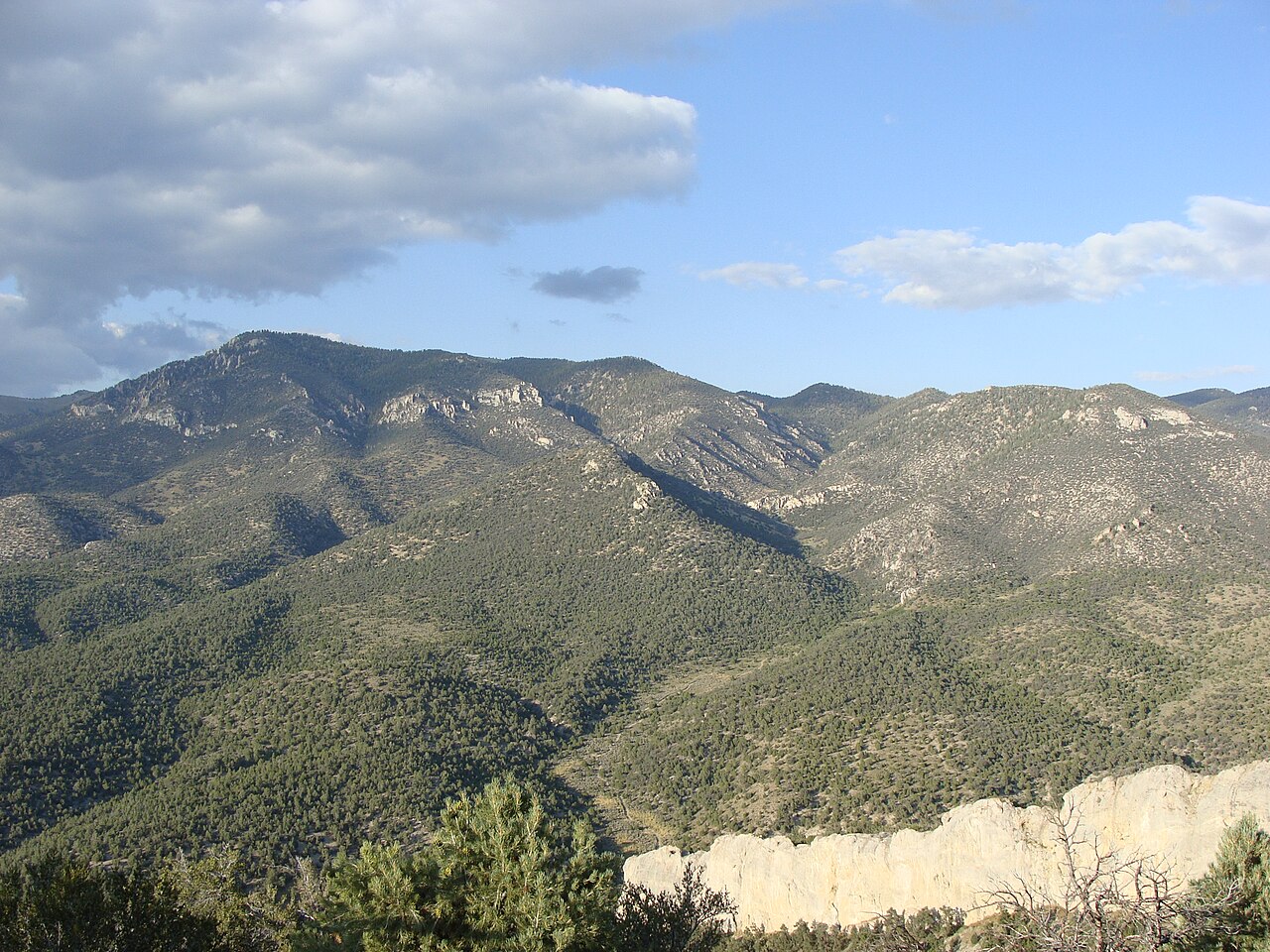
The Schell Creek Range in White Pine County, Nevada, the Great Basin range that US-50/US-93 climbs over at Connors Pass, the high point of US-50 in the state at 7,722 feet.
The Schell Creek Range in White Pine County, Nevada, the Great Basin range that US-50/US-93 climbs over at Connors Pass, the high point of US-50 in the state at 7,722 feet.N Walters / Wikimedia Commons · Public domain
00 Live conditions
No live data
No live condition feed for this pass right now. Check the state DOT or 511 before you climb.
01 Overview

Connors Pass is the high point on US-50 in Nevada, the road Life magazine once called "the Loneliest Road in America." The signed summit reads 7,722 ft, which makes it the second-highest highway pass in the state after the Mt. Rose Highway (NDOT). It crosses the Schell Creek Range in White Pine County, out in Great Basin country, on a two-lane road that climbs hard and then drops the same way.

One thing makes this crossing different from most. Three U.S. routes run together over the summit as a single road: US-6, US-50, and US-93. They split a few miles southeast at Majors Place, where US-93 turns south toward Pioche and Las Vegas while US-50 keeps east toward Great Basin National Park and the Utah line. So when weather shuts the pass, it pinches three highways at once. Ely, the county seat about 22 miles northwest of the summit, is the last full-service town before you climb.

This is a year-round highway, not an alpine pass that gates shut for the season. It gets temporary closures and chain control during winter storms, then reopens. Grades run up to about 8% with numerous curves (dangerousroads.org), and at 7,700 feet on an exposed ridge the weather can turn fast. There is no truck-escape ramp anywhere on this section, so plan your descent and your brakes before you start down.

  • Signed summit elevation is 7,722 ft; some databases list 7,729 ft (NDOT summit sign; dangerousroads.org)
  • Highest point on US-50 in Nevada and the state's second-highest highway pass after the Mt. Rose Highway (NDOT)
  • Three U.S. routes run concurrently over the top: US-6, US-50, and US-93 (NDOT summit sign)
  • Grades run up to about 8% with numerous curves (dangerousroads.org)
  • Ely sits about 22 miles northwest and is the last full-service town; US-93 south from Majors Place runs about 80 miles to Pioche with almost nothing between (roadtripusa.com)
  • Studded snow tires are legal October 1 through April 30, a fair proxy for the winter-traction season (NDOT)
  • No truck-escape ramp on this section; Nevada's escape ramps are all in the west (NDOT)
02 Chain controls & closures

There is no fixed seasonal gate on Connors Pass. It is a year-round U.S. highway, and chain control comes and goes with the storms. As a practical window, studded snow tires are legal in Nevada from October 1 through April 30 (NDOT), which is about when winter traction matters here. When a highway is posted for traction devices, Nevada law requires chains or snow tires, and vehicles over 10,000 lb GVW must chain up while that requirement is in effect (NDOT "Nevada Traction Device Requirements"). Nevada 511 and nvroads.com post the live level, with wording like "Chains or Snow Tires Required" or "Chains Required, All Vehicles except 4-wheel drive with Snow tires." The pass closes situationally, not on a calendar: a winter storm brings snow, ice, high wind, or whiteout, NDOT or NHP closes or chain-controls the road, and it reopens when conditions clear. Watch 511 (dial 511, or 1-877-NV-ROADS out of state) and the NHP road-hazards page at roadhazards.nv.gov before you climb.

03 Notable hazards
Hazard

Wind and whiteout

At about 7,700 ft on an exposed Great Basin ridge, winter storms bring high wind and blowing-snow whiteouts. NWS routinely warns of chain controls, closures, and sub-quarter-mile visibility on US-50 during Nevada storm cycles (NWS Elko covers this area). There is no Connors-Pass-specific bulletin, so treat this as the general winter hazard for the corridor and slow down when the snow starts moving sideways.

Hazard

Snow and ice on the grade

The climb runs up to about 8% with numerous turns (dangerousroads.org). On a two-lane road at this elevation, packed snow and ice on the curves is the core cold-season risk and the reason chain control gets posted in the first place. Descend in a low gear and keep off the brakes where you can.

Hazard

Remoteness and no services

Ely, about 22 miles northwest, is the last full-service town before the pass. South from Majors Place, US-93 runs about 80 miles to Pioche with essentially nothing in between (roadtripusa.com; dangerousroads.org). A breakdown or a closure here strands you a long way from help, so fuel up and carry what you need before you commit to the climb.

Hazard

No escape ramp on this section

There is no runaway-truck ramp anywhere on this part of US-50/US-6/US-93. Nevada's escape ramps are all in the west: the Mt. Rose Highway at Incline Village, two on US-50 between Carson City and Lake Tahoe, and one in Laughlin (NDOT). On Connors Pass you have your brakes and your gears, nothing else, so set up your descent early.

Hazard

Open range and wildlife at night

East of the pass, US-50 crosses open rangeland toward Great Basin National Park. Open-range livestock and wildlife on a dark two-lane are a standard night hazard for this corridor. There is no pass-specific crash count for it, but the risk is real after dark, so watch the shoulders and your headlight throw.

04 History

The corridor over Connors Pass carries a lot of road history for one lonely stretch. It follows the Lincoln Highway, America's first transcontinental auto road, dedicated October 31, 1913 (Lincoln Highway Association). Before the cars, the same route carried the Pony Express and the Central Overland line (dangerousroads.org). US-50 itself was created with the original U.S. Highway System in 1926, though in Nevada the route had already shown up as State Route 2 on state maps as far back as 1919 (Wikipedia, U.S. Route 50 in Nevada).

The pass takes its name from Colonel P.E. Connors, who established Fort Ruby; you will also see it spelled "Conners," and the Majors Place junction was once called "Connors Station" (dangerousroads.org). In the 1970s the eastern half of the road over the pass, toward Majors Junction, was substantially realigned, and the old alignment is still partly traceable (socalregion.com). The nickname came later: in July 1986 Life magazine ran a piece calling the Nevada stretch of US-50 "the Loneliest Road in America." It was meant as a knock. Nevada tourism turned it into a slogan (Wikipedia, U.S. Route 50 in Nevada).

05 FAQ
How high is Connors Pass?
The summit sign reads 7,722 ft, and that is the number to go by (NDOT summit sign, photo-confirmed). Some databases list 7,729 ft. Either way it is the highest point on US-50 in Nevada and the state's second-highest highway pass after the Mt. Rose Highway (NDOT).
Do I need chains on Connors Pass?
Only when the road is posted for them. Under Nevada law, vehicles over 10,000 lb GVW have to chain up when a chain or snow-tire requirement is in effect (NDOT "Nevada Traction Device Requirements"). On a semi-trailer you need one set of chains regardless of axle count, and trailer axles with brakes have to be chained too. Check the live level on Nevada 511 or nvroads.com before you start the climb.
Does Connors Pass close in winter?
It is not seasonally closed. It is a year-round highway that gets temporary chain control or closures when a storm brings snow, ice, or high wind. There is no fixed closure calendar and no published count of closure days. Watch 511 and the NHP road-hazards page at roadhazards.nv.gov for the current status.
Is there a runaway-truck ramp on the grade?
No. There is no escape ramp on this section. Nevada's truck-escape ramps are all in the western part of the state: the Mt. Rose Highway, two on US-50 near Lake Tahoe, and one in Laughlin (NDOT). Manage your brakes and come down in a low gear.
How steep is it, and how far to the next services?
Grades run up to about 8% with numerous curves (dangerousroads.org). Ely, about 22 miles northwest, is the last full-service town. If you head south from Majors Place on US-93, it is roughly 80 miles to Pioche with almost nothing in between (roadtripusa.com), so top off the tank in Ely.
Which highways actually cross the pass?
Three of them at once. US-6, US-50, and US-93 run together as one two-lane road over the summit (NDOT summit sign). They split a few miles southeast at Majors Place, where US-93 turns south toward Pioche and US-50 continues east toward Great Basin National Park.
06 Related routes

Connors Pass on the live map

See conditions, incidents, and weather around Connors Pass in real time.

Open Live Map