← All passes
Mountain pass No. 41 Open

Tejon Pass (Grapevine)

Tejon Pass is the only freeway link between the Los Angeles Basin and the San Joaquin Valley, and just about everyone who drives it calls it the Grapevine. Interstate 5 climbs out of the Santa Clarita and Castaic side, tops out at the summit, then drops toward Bakersfield. The su

4,144Elevation (ft)
1,263Metres
I-5Route
CAState
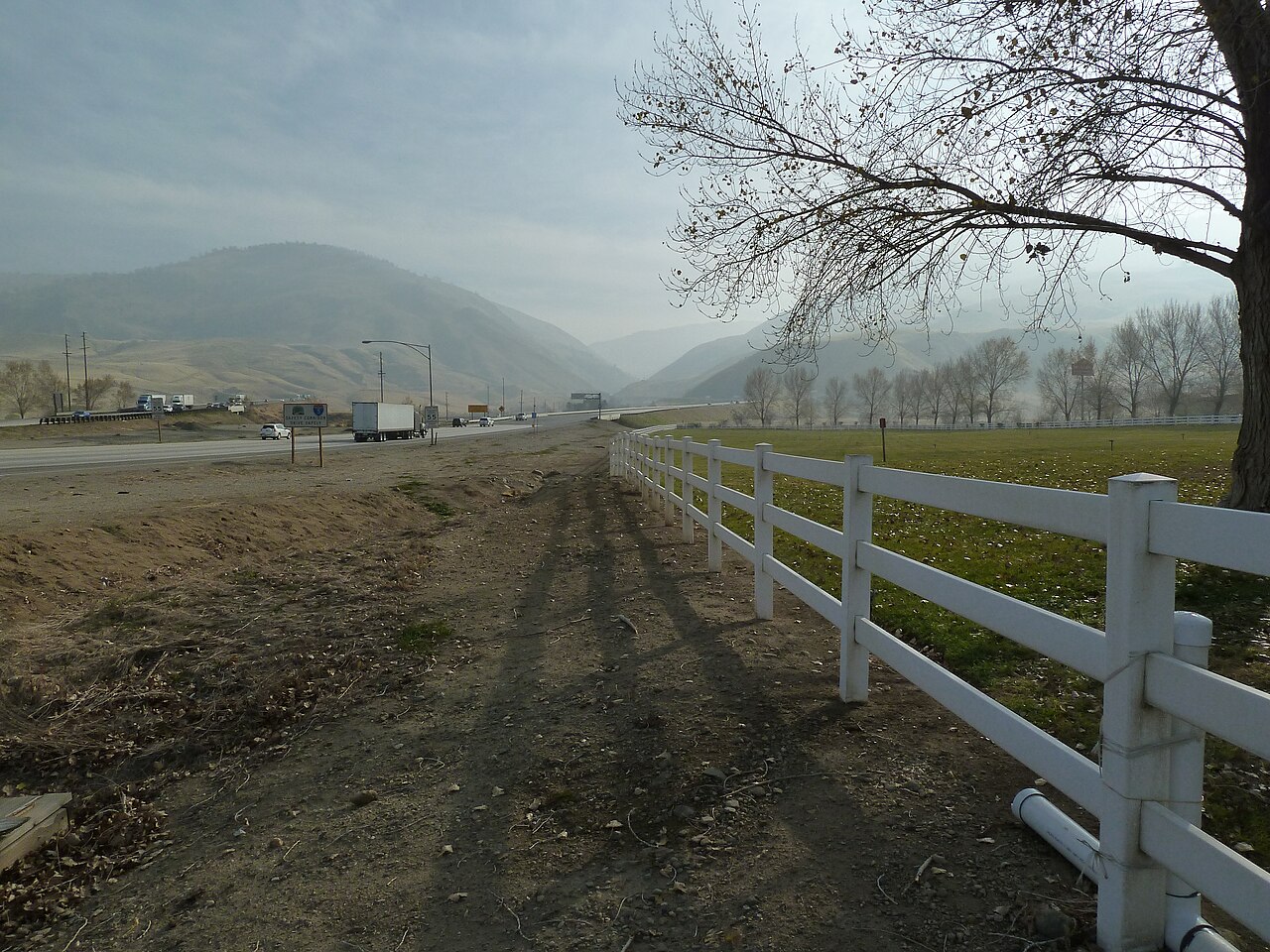
Interstate 5 approaching Grapevine Canyon from the south on Tejon Pass (Tejon Ranch, CA, 2011).
Interstate 5 approaching Grapevine Canyon from the south on Tejon Pass (Tejon Ranch, CA, 2011).Chris English / Wikimedia Commons · CC BY-SA 3.0
00 Live conditions
Open
Northbound
No chain controls are in effect at this time.
Southbound
No chain controls are in effect at this time.

Reported Jan 2, 2023, 11:05 AM MT. Conditions change fast at elevation; confirm with the DOT before you commit.

01 Overview

Tejon Pass is the only freeway link between the Los Angeles Basin and the San Joaquin Valley, and just about everyone who drives it calls it the Grapevine. Interstate 5 climbs out of the Santa Clarita and Castaic side, tops out at the summit, then drops toward Bakersfield. The summit is the highest point of I-5 in California at 4,144 ft (Wikipedia, Tejon Pass). The pass sits roughly 70 miles northwest of downtown LA and 46 miles south of Bakersfield (Wikipedia, Tejon Pass). The name traces back to the Spanish "La Cañada de las Uvas," Grapevine Ravine, for the wild grapes along the old road through the canyon (Wikipedia, Grapevine, California).

The north side, into Kern County, is the part that gets respect. It runs a 6% grade for about 5 miles, dropping roughly 1,600 ft into Grapevine Canyon (Wikipedia, Grapevine, California; dangerousroads.org). Northbound from Tejon Summit the road falls about 2,613 ft over 11.6 miles (dangerousroads.org; socalregion.com). That sustained downgrade is what cooks brakes on loaded trucks. Two runaway truck escape ramps sit along the steep descent for that reason (Wikipedia, Tejon Pass; crashforensics.com). The pass also marks where California's two largest fault systems, the San Andreas and the Garlock, cross (Wikipedia, Tejon Pass).

For a trucker the real planning problem is winter. Snow and ice at the 4,100-plus-foot summit shut the road most years, and there is no parallel freeway to fall back on. When CHP closes the Grapevine, the only practical reroute is US 101 along the coast, which adds real distance and hours. Right now there is one more wrinkle. Both I-5 rest areas on the Kern County side are closed for a long water and wastewater upgrade, so the usual staging spot on the climb is gone until 2027.

  • The summit is the highest point of I-5 in California at 4,144 ft (Wikipedia, Tejon Pass).
  • The north side runs a 6% grade for about 5 miles, dropping roughly 1,600 ft into Grapevine Canyon (dangerousroads.org; Wikipedia, Grapevine, California).
  • Northbound from Tejon Summit the road falls about 2,613 ft over 11.6 miles (dangerousroads.org).
  • Two runaway truck escape ramps sit along the steep northbound descent for rigs that lose their brakes (Wikipedia, Tejon Pass).
  • The pass is roughly 70 miles northwest of downtown LA and 46 miles south of Bakersfield (Wikipedia, Tejon Pass).
  • A full closure spans about 40 miles of I-5 from Castaic and Parker Road to Grapevine Road; the only detour is US 101 (CBS Los Angeles; Caltrans District 7).
  • Both Kern County I-5 rest areas closed in May 2026 for upgrades and are not expected to reopen until August 2027 (BakersfieldNow; KGET; SCVNews).
02 Chain controls & closures

Chain-control season runs roughly November through April, with closures decided storm by storm by CHP.

03 Notable hazards
Hazard

Snow and ice closures at the summit

The 40-mile stretch from Castaic to Grapevine gets closed by CHP most winters when snow and ice hit the 4,100-plus-foot summit. Up to a foot of snow has been reported at Lebec, and even big rigs get stuck. CHP points to the danger of one big-rig crash in snow stalling hundreds of vehicles at once (CBS Los Angeles, Feb 2023; Wikipedia, Tejon Pass).

Hazard

Runaway trucks and brake failure on the 6% grade

The sustained 6% northbound descent burns out brakes on loaded trucks, and the pass has two runaway truck ramps. In 2017 a Peterbilt entered a ramp too fast for the gravel to stop it, killing the driver and a passenger. CHP keeps warning truckers about pre-trip brake checks and downhill speed (CDLLife, 2017; crashforensics.com).

Hazard

High winds and near-zero visibility

Winter storms bring gusts that have topped 80 mph with near-zero visibility, and high-wind events trigger Public Safety Power Shutoffs at the Tejon Pass rest areas. Wind is a frequent problem for high-profile trucks (ABC7/NWS, Feb 2023; Caltrans District 7).

Hazard

Rock and mud slides in heavy rain

Heavy rains sometimes set off mud and rock slides through Grapevine Canyon that close the highway on their own, with no snow involved (Wikipedia, Grapevine, California).

Hazard

Rest areas closed through August 2027

Both the northbound and southbound I-5 Tejon Pass rest areas in Kern County, near Lebec and Grapevine, closed in May 2026 for a water and wastewater upgrade and are not expected to reopen until August 2027. That removes a key staging point on the climb (BakersfieldNow; KGET; SCVNews).

04 History

The Ridge Route opened around 1910, became three lanes in 1933 and four in 1947, and the modern eight-lane I-5 opened in 1970 (Wikipedia, Tejon Pass).

05 FAQ
How steep is the Grapevine and how long is the grade?
The famous north side, into Kern County, is about 6% for roughly 5 miles, dropping about 1,600 ft into Grapevine Canyon. Northbound from Tejon Summit the road falls about 2,613 ft over 11.6 miles. The summit itself is 4,144 ft, the highest point of I-5 in California (Wikipedia, Tejon Pass; dangerousroads.org).
What's the detour when the Grapevine closes?
There is no parallel freeway. CHP sends north-south traffic to US 101 along the coast, which adds substantial mileage and time. When the closure is a short snow event, it is usually better to wait it out than to reroute (CBS Los Angeles; Caltrans District 7).
Do I need chains over Tejon Pass, and what level?
During winter storms, yes. Caltrans uses R-1 (chains on all vehicles except light passenger vehicles under 6,000 lb with snow tires), R-2 (except 4WD under 6,500 lb with snow tires on all four), and R-3 (all vehicles, no exception). Heavy trucks over 6,500 lb chain up when posted, and any towing vehicle always needs chains (Caltrans Truck Chain Requirements).
How does CHP decide to close it, and how is it reopened?
CHP, not Caltrans, makes the closure and reopen call, based on snow, ice, and the steep grade plus heavy big-rig volume. One stalled rig in snow can strand hundreds of vehicles. CHP often paces or escorts traffic over the pass first, then closes it, and reopens with CHP-led convoys (Wikipedia, Tejon Pass; KGET; CBS Los Angeles).
Why is the Grapevine so dangerous for trucks specifically?
The sustained 6% downgrade overheats brakes on loaded trucks. There are two runaway truck ramps, and fatal runaway-truck crashes have happened, including one in 2017. CHP pushes low gears, slow downhill speeds, and pre-trip brake inspections (crashforensics.com; CDLLife).
Are there truck facilities or rest areas on the pass right now?
Not on the pass itself for now. The I-5 Tejon Pass rest areas, both directions in Kern County near Lebec and Grapevine, are closed for a water and wastewater upgrade from May 2026 and are not expected to reopen until August 2027. Plan fuel and rest in Lebec, Frazier Park, or down in Castaic or Bakersfield (BakersfieldNow; KGET; SCVNews).
06 Related routes

Tejon Pass (Grapevine) on the live map

See conditions, incidents, and weather around Tejon Pass (Grapevine) in real time.

Open Live Map