← All passes
Mountain pass No. 28 No live data

Big Savage Mountain

Big Savage Mountain is a ridge of Savage Mountain in Western Maryland, near the Garrett and Allegany county line. I-68, the National Freeway, runs concurrent with US 40 and crosses the ridge at about 2,800 feet above sea level (AARoads). For most truckers the summit is not the pr

2,800Elevation (ft)
853Metres
I-68Route
MDState
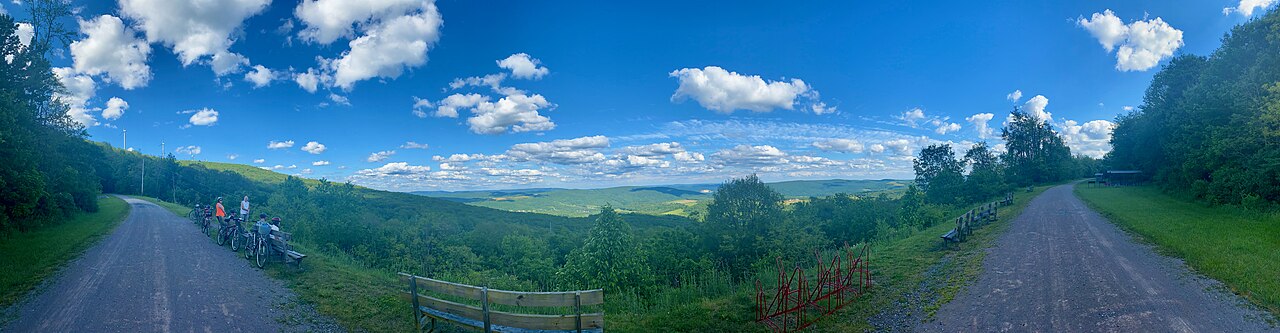
A panoramic view from the Big Savage Mountain overlook, the ridge that I-68 climbs over in western Maryland.
A panoramic view from the Big Savage Mountain overlook, the ridge that I-68 climbs over in western Maryland.daveynin / Wikimedia Commons · CC BY
00 Live conditions
No live data
No live condition feed for this pass right now. Check the state DOT or 511 before you climb.
01 Overview

Big Savage Mountain is a ridge of Savage Mountain in Western Maryland, near the Garrett and Allegany county line. I-68, the National Freeway, runs concurrent with US 40 and crosses the ridge at about 2,800 feet above sea level (AARoads). For most truckers the summit is not the problem. The eastbound descent toward Cumberland is. Sources describe it as roughly a 13-mile, 6% downgrade, and AARoads confirms the 6% value from Frostburg to LaVale.

The grade is not continuously downhill the whole way, but it is long enough and steep enough to cook brakes. The truck speed limit on the descent drops to 45 mph while cars start at 65 and step down through 55, 50, and 40 mph into downtown Cumberland. The Finzel scale house sits on the western approach, and Maryland State Police Commercial Vehicle Enforcement watches truck speeds hard through the 45 and 40 mph zones. Past the descent, a sharp curve atop Haystack Mountain near Exit 42 is where tractor-trailer rollovers tend to cluster.

This is an exposed Allegheny ridge, so weather stacks on top of the grade. Big Savage is one of two named fog zones on I-68, the other being Keysers Ridge. After a deadly fog pileup in 2003, Maryland installed a reduced-visibility warning system here. In winter the National Weather Service routinely flags this stretch for blowing and drifting snow, quarter-mile visibility, and gusts in the 30 to 40 mph range with ice on the highest ridges.

  • Highway crossing of the ridge sits at about 2,800 feet above sea level (AARoads); the natural peak of Big Savage Mountain is 2,566 ft (Wikipedia)
  • The eastbound descent toward Cumberland is roughly a 13-mile, 6% downgrade (TruckersReport, Cross Country Roads); AARoads confirms 6% from Frostburg to LaVale
  • Highway drops about 1,800 feet in 9 miles from Savage Mountain down to LaVale (Wikipedia)
  • Truck speed limit on the descent is 45 mph; cars step from 65 down to 40 mph into Cumberland (Cross Country Roads)
  • Maryland State Police have inspected over 47,000 trucks at the Finzel scale house (Cumberland Times-News)
  • Fog warning system installed in 2005 cost about $230,000 and alerts drivers when visibility drops below 1,000 feet (Wikipedia citing MDSHA)
  • A signed eastbound Truck Brake and Equipment Check Area sits about half a mile before the final Cumberland descent (Cross Country Roads)
02 Chain controls & closures

Maryland does not run a graduated chain-control system like the western states. There are no R-1, R-2, or R-3 levels, no chain-law season, and no permanent chain-up pullouts on I-68 over Big Savage. What exists is narrower. Under Maryland Transportation Code Section 21-1119, the State Highway Administration can designate and sign a road as a snow emergency route. When that road is signed and the Secretary of State Police declares a snow emergency, vehicles other than motorcycles may not drive it unless they carry chains or snow tires on at least one wheel at each end of a driving axle. Outside of a declared snow emergency, Maryland lets drivers run chains at their own discretion for traction in snow and ice. So there is no fixed start or end date. The requirement turns on when a snow emergency is declared and lifted for a signed route, not on a posted seasonal calendar.

03 Notable hazards
Hazard

Brake fires and brake failure on the eastbound grade

The long 6% descent into Cumberland heats brakes fast, and the Cumberland Times-News has reported a rash of big-rig fires there blamed largely on driver error and brake overheating. One driver on the TruckersReport forum joked that Cumberland is the town that smells like hot brakes. Gear down early, stay off the service brakes, and use a steady controlled speed instead of riding them.

Hazard

Tractor-trailer rollovers on the Haystack Mountain curve

Rollovers cluster eastbound at LaVale near Exit 42, where a sharp curve atop Haystack Mountain meets the descent into Cumberland. Four tractor-trailer crashes on that section prompted the Maryland Motor Truck Association to issue a public warning (Cumberland Times-News). Carry less speed into the curve than you think you need.

Hazard

Dense fog

Big Savage is one of two named fog zones on I-68, alongside Keysers Ridge. The 2003 pileup west of Frostburg killed 2 and injured nearly 100 in fog. Maryland's reduced-visibility warning system now flags drops below 1,000 feet, but the signs only help if you slow down when they light up.

Hazard

Winter wind, blowing snow, and ice

This is an exposed Allegheny ridge. NWS Baltimore/Washington warnings cite blowing and drifting snow, visibility down to about a quarter mile, gusts of 30 to 40 mph, and ice on the highest ridges. Travel west of Big Savage Mountain gets called out by name as particularly dangerous in winter storms.

Hazard

Long sustained downgrade with a low truck speed limit

The roughly 13-mile, 6% descent with a 45 mph truck limit is the core mechanical hazard, because heat builds in the brakes over a long pull. The grade is not downhill the entire 13 miles, but it runs long enough to matter (TruckersReport, Cross Country Roads, AARoads).

04 History

I-68 opened through the Savage Mountain ridge in Garrett County on August 13, 1976 (Wikipedia). The stretch took on a darker reputation in May 2003, when a fog-related pileup involving roughly 85 vehicles hit the road west of Frostburg on Savage Mountain. Two people were killed and nearly 100 were injured. In response, Maryland SHA installed the state's fog and reduced-visibility warning system on this segment in 2005, at a cost of about $230,000, with signs reading "Reduced Visibility Possible" that activate when visibility falls below 1,000 feet (Wikipedia citing MDSHA, with USDOT ITS and TRID records documenting the project).

The truck problem has stayed in the news in recent years. After four tractor-trailer crashes on the Haystack Mountain section, the Maryland Motor Truck Association publicly warned eastbound drivers to use extreme caution from the Garrett County line through Cumberland. The Cumberland Times-News has reported a rash of big-rig fires on the eastbound grade, attributed largely to driver error and overheated brakes, and State Police have run commercial-vehicle speed-enforcement initiatives at and near the Finzel scale house.

05 FAQ
How steep is the I-68 grade at Big Savage Mountain?
The summit crossing sits at about 2,800 feet. The part that matters for trucks is the eastbound descent toward Cumberland, roughly a 13-mile, 6% downgrade. AARoads confirms the 6% from Frostburg to LaVale, and Wikipedia notes the highway drops about 1,800 feet in 9 miles down to LaVale. The truck speed limit on the descent is 45 mph.
Why do so many trucks catch fire or roll on I-68 into Cumberland?
Two reasons. Overheated and failed brakes on the long 6% grade cause fires, and a sharp curve atop Haystack Mountain near Exit 42 is where rollovers cluster. The Maryland Motor Truck Association issued a caution warning after four tractor-trailer crashes there, and State Police enforce truck speeds aggressively (Cumberland Times-News).
Does Maryland have a chain law for I-68?
Not a graduated R-1, R-2, R-3 system. Under Maryland Transportation Code Section 21-1119, if a road is signed as a snow emergency route and a snow emergency is declared, vehicles need chains or snow tires on at least one wheel at each end of a driving axle. Outside of that, Maryland allows chains at the driver's discretion.
Will I-68 over Big Savage close in a storm?
There is no published fixed wind or visibility number that triggers an automatic closure. Closures here are incident-driven and managed in real time by MDOT SHA and CHART, with status posted on Maryland 511. The National Weather Service in Baltimore/Washington frequently warns of dangerous travel on this stretch with blowing snow, quarter-mile visibility, and gusts of 30 to 40 mph.
Is there a runaway truck ramp or brake-check area on Big Savage?
There is a signed eastbound Truck Brake and Equipment Check Area about half a mile before the final descent into Cumberland (Cross Country Roads). As for a runaway ramp, the documented I-68 ramp is farther east at Sideling Hill, not on Big Savage itself. We could not verify a runaway ramp physically on the Big Savage descent.
What is the fog like, and is there a warning system?
Big Savage is a known fog zone. After the deadly 2003 pileup of about 85 vehicles, Maryland SHA installed a warning system in 2005 at a cost of about $230,000. The Reduced Visibility Possible signs activate when visibility falls below 1,000 feet (Wikipedia citing MDSHA).
06 Related routes

Big Savage Mountain on the live map

See conditions, incidents, and weather around Big Savage Mountain in real time.

Open Live Map