← All passes
Mountain pass No. 52 Open

Marias Pass

Marias Pass carries US-2 across the Continental Divide at the southern edge of Glacier National Park, in far-northern Montana. The posted summit elevation is 5,216 ft on the sign at the top (USGS marker; Wikipedia lists 5,213 ft). It is the lowest crossing of the Divide between C

5,216Elevation (ft)
1,590Metres
US-2Route
MTState
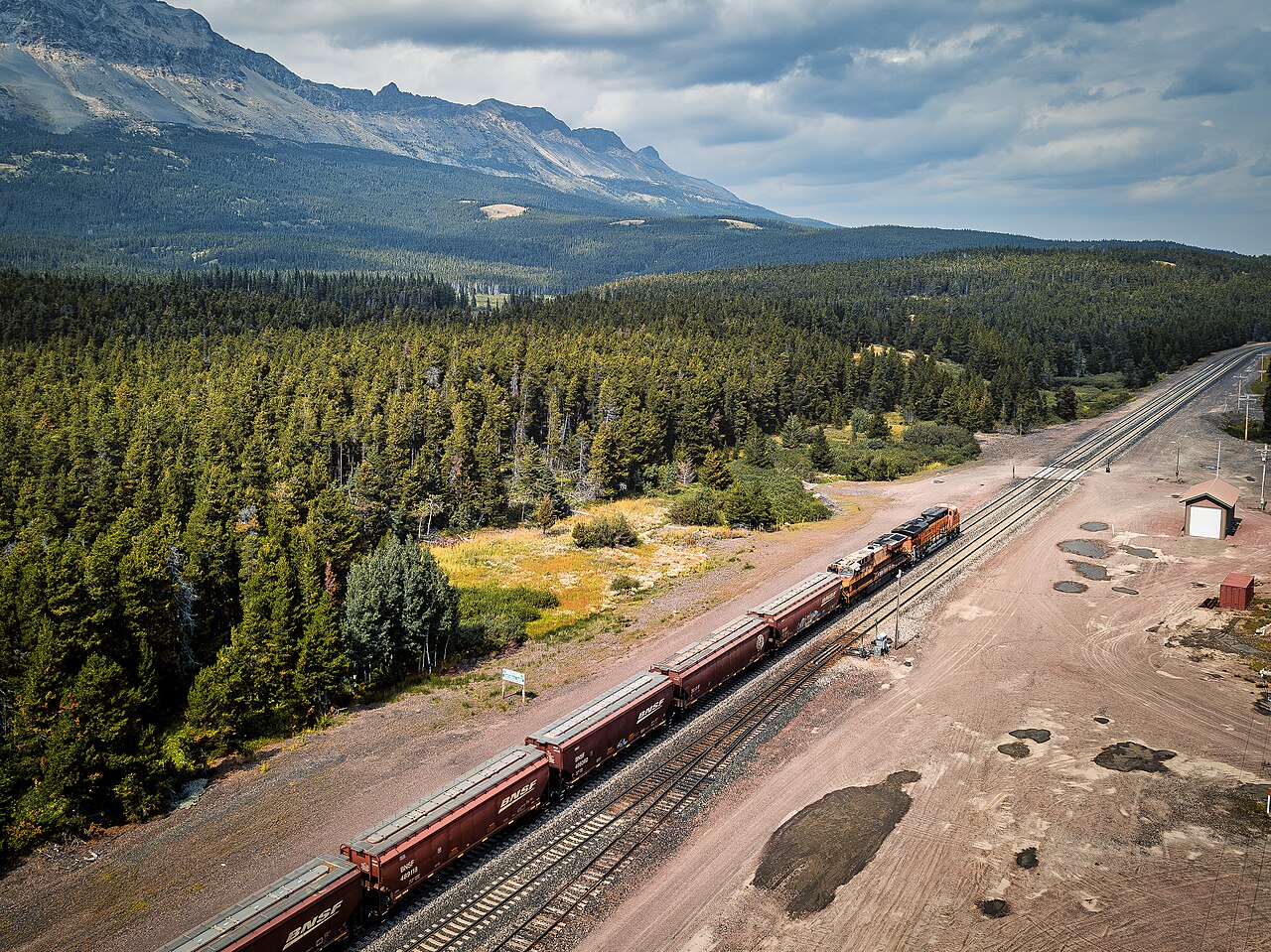
An aerial view of Marias Pass on the Continental Divide, where a freight train threads through the forested Montana Rockies alongside US-2.
An aerial view of Marias Pass on the Continental Divide, where a freight train threads through the forested Montana Rockies alongside US-2.Mobilus In Mobili / Wikimedia Commons · CC BY-SA
00 Live conditions
Open
Temperature
43°F
Road
Dry
Weather
43°F, Dry
Northbound
No restrictions
Southbound
No restrictions

Reported Jun 2, 2026, 11:23 PM MT. Conditions change fast at elevation; confirm with the DOT before you commit.

01 Overview

Marias Pass carries US-2 across the Continental Divide at the southern edge of Glacier National Park, in far-northern Montana. The posted summit elevation is 5,216 ft on the sign at the top (USGS marker; Wikipedia lists 5,213 ft). It is the lowest crossing of the Divide between Canada and central New Mexico, and the northernmost U.S. pass that stays open to automobile traffic year-round (Wikipedia). US-2 shares the corridor with the BNSF Railway and Amtrak's Empire Builder.

For a trucker, this is the through-route past Glacier. Going-to-the-Sun Road inside the park is seasonal and is not a truck route, so US-2 over Marias is the year-round commercial crossing of the Divide in this part of Montana and the main alternative to I-90 over MacDonald Pass farther south. The climb is unusually gentle for a Divide crossing. The east approach runs about 15.6 miles at roughly a 1.8 percent average grade, gaining around 1,744 ft (PJAMM Cycling). Wikipedia describes a broad, open valley one to six miles wide with scarcely a hill, which is exactly why railroad engineer John Stevens chose it.

Grade is not the worry here. Wind, ground blizzards, ice, and avalanche-corridor weather are. The east side near Marias Pass, East Glacier, and the Rocky Mountain Front is known for extreme downslope winds, and the west descent runs through one of the most active avalanche zones on any U.S. transportation mainline. The pass has no scheduled seasonal closure. When it does close, the cause is an event: avalanche control, a crash, or a blizzard. Check Montana 511 for live status.

  • Posted summit elevation is 5,216 ft on the sign at the top; Wikipedia lists 5,213 ft (USGS marker; Wikipedia)
  • Lowest crossing of the Continental Divide between Canada and central New Mexico, and the northernmost U.S. pass open to autos year-round (Wikipedia)
  • East approach is about 15.6 miles at a 1.8 percent average grade, gaining roughly 1,744 ft (PJAMM Cycling)
  • Montana's commercial chain-carry law runs October 1 through April 30 for towing units 26,001 lbs GVW or greater (MDT, MCA 61-9-436)
  • Posted commercial chain segments on US-2: Goatlick Hill to Marias Pass, MM 179 to 199 eastbound, and Marias Pass, MM 192 to 199 eastbound (MDT chains page)
  • Summit averages about 250 in of snow a year, over 20 ft (Wikipedia/NWS normals; one source cites about 260.7 in on 1941 to 1980 normals)
  • Climate records run from 111 degrees F to minus 53 degrees F at or near the pass (Wikipedia/NWS)
02 Chain controls & closures

Montana runs a carry-then-chain system, not a multi-tier R-1/R-2/R-3 setup like California. The commercial chain-carry season is October 1 through April 30. During that window, towing units of 26,001 lbs GVW or greater must carry chains or an approved traction device where chains may be required (four-wheel-drive units are exempt from the carry rule; MDT, MCA 61-9-436). Actual chain-up is required only when MDT posts it. The agency activates flashing-beacon signs ("State law when flashing, chains required for towing units") and flip-open signs when conditions warrant, and when the law is in effect all drive wheels must be chained. The posted commercial segments on the Marias corridor are Goatlick Hill to Marias Pass, MM 179 to 199 eastbound, and Marias Pass, MM 192 to 199 eastbound. The carry requirement comes off on April 30 each year. Note that the chain-carry season is separate from any closure: the pass itself has no scheduled seasonal shutdown.

03 Notable hazards
Hazard

Wind and ground blizzards

The east side near Marias Pass, East Glacier, Browning, and the Rocky Mountain Front sees extreme downslope, Chinook-type winds. NWS Great Falls (office TFX) has issued High Wind Warnings for the East Glacier/Marias Pass zone with west winds of 35 to 55 mph, gusts up to about 90 mph, and over 100 mph possible near the Front. It also issues Blizzard Warnings for ground-blizzard conditions, where existing snow blows into near-zero-visibility whiteout with no new snowfall. High-profile trucks and light trailers are the most exposed to blow-over.

Hazard

Avalanche corridor (Avalanche Alley)

The west descent runs through John F. Stevens Canyon near Essex, one of the most active avalanche zones on any U.S. transportation mainline. The railroad there faces 12 major avalanche paths and 26 slide-starting zones, protected by snowsheds. US-2 and the BNSF tracks are pinched together between Glacier National Park and Flathead National Forest, so avalanche danger reaches the highway and can close it. BNSF has run a dedicated avalanche-forecasting team in the canyon since the winter of 2005 (Railfan & Railroad; Trains/Justin Franz).

Hazard

Heavy snowfall

The summit averages about 250 in of snow a year, over 20 ft (Wikipedia/NWS normals; one source cites about 260.7 in on 1941 to 1980 normals). The heaviest months are December through February, when Pacific storms intensify on the west slope.

Hazard

Ice and temperature extremes

Records at or near the pass run from 111 degrees F to minus 53 degrees F (Wikipedia/NWS). Big swings drive freeze-thaw, and cold snaps with blowing snow produce ice and refreeze. East-side wind can scour and polish the road surface.

Hazard

Blowing-snow whiteout

The main low-visibility hazard here is whiteout from blowing snow during a ground blizzard, not valley fog. NWS Great Falls blizzard products describe near-zero visibility and significant roadway obstruction even without falling snow (NWS TFX).

04 History

The Blackfeet and other tribes knew and used Marias Pass long before it appeared on a railroad map. In December 1889, Great Northern Railway engineer John Frank Stevens located and charted the crossing with a Flathead guide named Coonsah, confirming the low Divide route the railroad wanted. Construction over the pass began on August 1, 1890. The Great Northern is BNSF today, and the line still runs Amtrak's Empire Builder. Between 1912 and 1930 the railroad built about a dozen snowsheds on the west slope to protect the line from avalanches, and ten still stand (Railfan & Railroad; Trains/Justin Franz).

The highway came later. First travel over the Divide on US Highway No. 2 at Marias Pass was allowed on July 4, 1930, and the crossing opened that July (Forest History Society; Flathead Beacon). The 60-ft Theodore Roosevelt Memorial Obelisk went up at the summit, cornerstone in August 1930 and finished in the summer of 1931, honoring Roosevelt and the 25th anniversary of the U.S. Forest Service; a statue of John F. Stevens stands nearby. The obelisk was moved when US-2 was realigned, a relocation the Flathead Beacon dates to 1989. The canyon has kept its reputation. On January 28, 2004, an empty 119-car BNSF freight stopped by an avalanche in John Stevens Canyon was struck by a second slide, derailing 15 cars and closing the line about 29 hours. In March 2014 a major avalanche cycle buried both BNSF mainline tracks near Essex, and one slide on March 6 was large enough to briefly dam the Middle Fork Flathead River (Flathead Beacon).

05 FAQ
Does US-2 over Marias Pass close in winter?
There is no scheduled seasonal closure. Marias is the northernmost year-round auto crossing of the Continental Divide (Wikipedia). When it does close, the cause is temporary: avalanche control, a crash, or a blizzard. Check Montana 511 at 511mt.net or dial 511 in state. There is no official annual closure-day count I could find.
Do I need chains over Marias Pass, and when?
From October 1 through April 30, towing units of 26,001 lbs GVW or greater must carry chains or an approved traction device (MCA 61-9-436). You only chain up when MDT posts it on the flashing or flip-open signs. The posted commercial segments are Goatlick Hill to Marias Pass, MM 179 to 199 eastbound, and Marias Pass, MM 192 to 199 eastbound (MDT chains page).
How steep is the climb? Will I cook my brakes?
It is gentle for a Divide crossing. The east approach is about 15.6 miles at a 1.8 percent average grade, gaining roughly 1,744 ft (PJAMM Cycling), and Wikipedia describes a broad open valley with scarcely a hill. Grade is not the main worry. Wind, ice, and visibility are.
What is the biggest danger here for a high truck?
Wind. NWS Great Falls (TFX) issues High Wind Warnings for the Marias Pass/East Glacier zone with gusts up to about 90 mph and over 100 mph possible near the Front, plus ground-blizzard Blizzard Warnings. That means whiteout and real blow-over risk for high-profile rigs.
Is Marias Pass really avalanche country?
Yes. The west slope through John F. Stevens Canyon near Essex is known as Avalanche Alley, with 12 major avalanche paths and 26 slide-starting zones protected by snowsheds. BNSF has run a dedicated avalanche team there since 2005 (Railfan & Railroad; Trains/Justin Franz). US-2 shares the same pinch point and can close for avalanche control.
How much snow does it get, and how bad is the ice?
The summit averages about 250 in a year, over 20 ft (Wikipedia/NWS normals; one source cites about 260.7 in on 1941 to 1980 normals), heaviest December through February. Records swing from 111 degrees F to minus 53 degrees F, which drives heavy freeze-thaw and ice on the road.
06 Related routes

Marias Pass on the live map

See conditions, incidents, and weather around Marias Pass in real time.

Open Live Map