← All passes
Mountain pass No. 70 Open

Lost Trail Pass

Lost Trail Pass sits at 7,014 ft on the Montana and Idaho state line, where U.S. Highway 93 crosses the Bitterroot Mountains (Wikipedia). It is a Bitterroot Divide crossing, not a Continental Divide crossing. The Divide itself runs about a half mile east of the summit, back insid

7,014Elevation (ft)
2,138Metres
US-93Route
MT/IDState
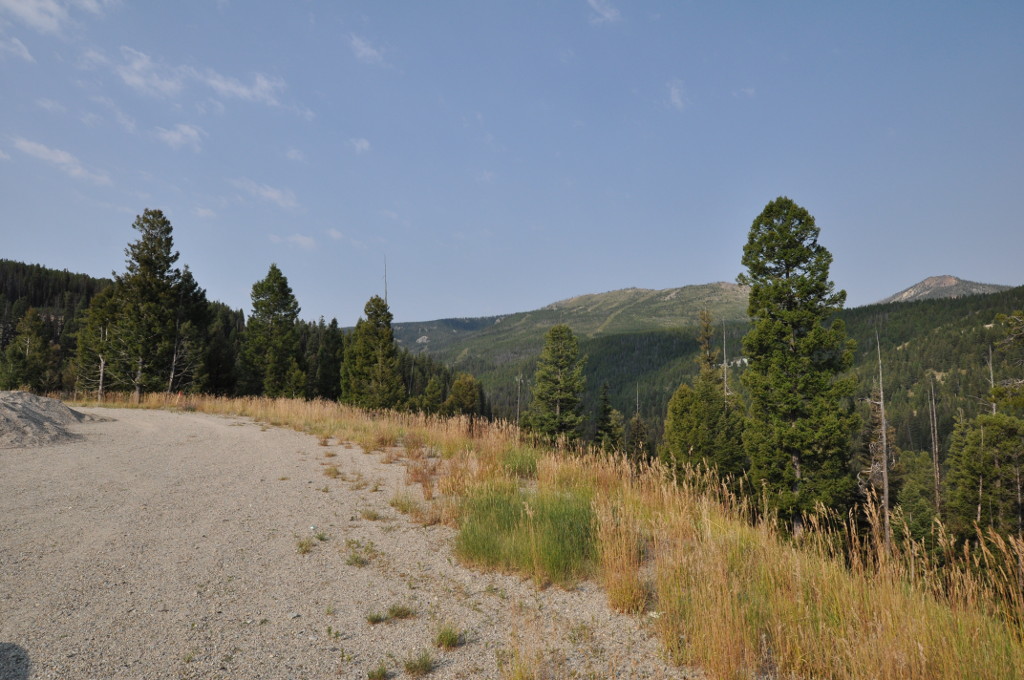
Looking south across Lost Trail Pass on the Montana side, with the Bitterroot Mountains rising along the US-93 crossing of the Idaho-Montana border.
Looking south across Lost Trail Pass on the Montana side, with the Bitterroot Mountains rising along the US-93 crossing of the Idaho-Montana border.Magicpiano (Wikimedia Commons) · CC BY-SA
00 Live conditions
Open
Temperature
43°F
Road
Dry
Weather
43°F, Dry
Northbound
No restrictions
Southbound
No restrictions

Reported Jun 2, 2026, 11:23 PM MT. Conditions change fast at elevation; confirm with the DOT before you commit.

01 Overview

Lost Trail Pass sits at 7,014 ft on the Montana and Idaho state line, where U.S. Highway 93 crosses the Bitterroot Mountains (Wikipedia). It is a Bitterroot Divide crossing, not a Continental Divide crossing. The Divide itself runs about a half mile east of the summit, back inside Montana. At the top you hit a three-way junction: US-93 runs north and south, and MT-43 peels off east toward Chief Joseph Pass and Gibbons Pass. The Lost Trail Powder Mountain ski area sits right at that junction, which tells you most of what you need to know about the snow up here.

North of the summit, US-93 drops into the Bitterroot River Valley and runs toward Sula, Darby, Hamilton, Lolo, and on to Missoula. Sula is roughly 13 miles down the Montana side. South, the road descends into Idaho toward North Fork, where the Salmon River turns west, then on to Salmon. This is the main link between the Bitterroot Valley and the Salmon River country, and there is no easy parallel route to take instead.

For a driver, the concerns are straightforward. It is a high two-lane mountain crossing with sustained grades on both approaches and a hard seasonal climate. The Idaho side ices and closes faster than the Montana side. A single jackknifed semi can block both directions until it is cleared. Sources describe roughly 5 miles of climbing on each approach, but the exact grade figures circulating online are not DOT-verified, so plan for a real climb and check live conditions before you start it.

  • Summit elevation is 7,014 ft on the Montana and Idaho state line in the Bitterroot Mountains (Wikipedia); dangerousroads.org lists a slightly higher 7,030 ft.
  • Carried by US-93; Ravalli County, MT on the north side, Lemhi County, ID on the south.
  • The summit is about a half mile west of the Continental Divide, so this is a Bitterroot Divide crossing, not a Continental Divide one (Wikipedia).
  • At the top, MT-43 junctions east toward Chief Joseph Pass and Gibbons Pass; the ski area sits at this junction.
  • Sula, MT is roughly 13 miles north of the summit; the south side descends to North Fork and Salmon, Idaho.
  • Not on MDT's seasonally closed roads list, so it stays open and maintained year-round (MDT Seasonally Closed Roads).
  • Sources describe roughly 5 miles of climbing on each approach, but no DOT-verified grade percentage exists.
02 Chain controls & closures

There is no fixed chain-control season or closure date here, because US-93 over Lost Trail Pass stays open and maintained year-round. It does not appear on MDT's seasonally closed roads list, which covers only Beartooth, Skalkaho, Looking Glass, and Thompson Pass (MDT Seasonally Closed Roads). What does run on a calendar is Idaho's commercial chain-up law. On the Idaho side, chains can be required on commercial vehicles over 26,000 lb when ITD activates roadside chain-up signs, and the enforcement window runs October 1 through April 30 under Idaho Code 49-948. The requirement comes off as soon as conditions allow. Montana does not run a posted chain-level system like California's R-1, R-2, R-3; MDT handles it through live conditions and any traction or closure orders on its 511 system. Closures here are short and incident-driven, triggered by ice, freezing rain, crashes, or storms, and the road reopens once it is cleared. Check Idaho 511 and MDT 511 before you climb.

03 Notable hazards
Hazard

Ice and freezing rain on the Idaho side

The south approach takes freezing rain and turns hazardous fast. MDT closed the Idaho side for exactly this on December 27, 2022 (NBC Montana). If one side is going to go bad first, expect it to be Idaho's.

Hazard

Heavy snow

This is deep snow country. The summit ski area, Lost Trail Powder Mountain, runs from a 7,000-ft base and reports very heavy seasonal snowfall. Treat exact inches as soft, but the pass is among Montana's snowiest spots, so blowing and drifting snow are routine through the cold months.

Hazard

Avalanche terrain off the road

The West Central Montana Avalanche Center forecast area reaches Lost Trail Pass at its southern edge. The highway and ski area are excluded from those forecasts because avalanche mitigation is done there, so your driving lane is mitigated, but the backcountry slopes right next to it are active avalanche terrain.

Hazard

Wind

Lost Trail sits in NWS zone MTZ006, the Bitterroot and Sapphire mountains, forecast by NWS Missoula, which issues wind advisories for the area. There is no verified peak-wind figure for the pass itself, so treat wind as a known seasonal hazard rather than a number you can plan around.

Hazard

Crash blocking on a two-lane climb

US-93 here is two lanes the whole way up. One jackknifed semi can block both directions and shut the pass until it is cleared, as happened in March 2026 (Ravalli Republic). There is no room to squeeze past a blockage on this road.

04 History

In early September 1805, the Lewis and Clark expedition crossed the Bitterroot Divide near present-day Lost Trail Pass. The going was brutal on September 3, with several of their roughly 29 horses falling or getting injured on the terrain. On September 4, guided by Old Toby, the Corps descended into Ross's Hole and met a large Salish encampment. Wikipedia places the actual crossing about 1.3 miles northwest of today's pass. The name came later. According to local and Lewis and Clark histories, highway surveyors laying out the route around 1910 got temporarily confused about their location, and the "Lost Trail" name was attached when the highway gap was named, reportedly at the urging of a local rancher who knew the expedition journals. By most accounts, construction of US-93 began piecemeal in the mid-1920s and the route over the gap was completed and named in the 1930s.

The pass still closes on short notice in bad weather. On December 27, 2022, US-93 briefly closed on the Idaho side because of freezing rain, with MDT reporting hazardous, severe driving conditions that morning (NBC Montana). In March 2026, a jackknifed semi blocked both lanes at the pass and shut the highway until it was cleared and reopened (Ravalli Republic).

05 FAQ
Does Lost Trail Pass close for the winter?
No. It is not on MDT's seasonally closed roads list, which covers only Beartooth, Skalkaho, Looking Glass, and Thompson Pass (MDT Seasonally Closed Roads). US-93 over the pass stays open and maintained year-round. The closures you hear about are short and incident-driven, caused by ice or crashes, and the road reopens once it is cleared.
Which side gets bad first?
The Idaho side, the south approach, is the one that repeatedly ices and closes first. MDT shut the Idaho side for freezing rain on December 27, 2022 (NBC Montana). If conditions are turning, watch the south side.
Do I need chains over Lost Trail Pass?
On the Idaho side, Idaho's chain-up law can require chains on commercial vehicles over 26,000 lb when ITD activates the roadside chain-up signs, with an enforcement window of October 1 through April 30 under Idaho Code 49-948. No DOT source names a fixed chain-up pad or mile marker here, so go by the posted signs and live 511 status. On the Montana side, follow MDT conditions and any traction orders on 511.
How high and how steep is it?
The summit is 7,014 ft (Wikipedia). There are sustained grades on both approaches, and sources describe roughly 5 miles of climbing on each side. Be careful with the exact grade numbers you see online: the often-quoted figure traces back to an AI wiki, not a DOT, and is unverified. Plan for a real climb either way.
What's the weather risk up there?
Deep snow, since the summit ski area runs from a 7,000-ft base and the pass is among Montana's snowiest spots. Add freezing rain and ice, blowing snow and wind in NWS zone MTZ006 forecast by NWS Missoula, and active avalanche terrain off the road. The driving lane is avalanche-mitigated, but the slopes next to it are not (NWS Missoula; West Central Montana Avalanche Center).
Where do I check conditions before I climb it?
On the Montana side, use MDT 511, either the 511 map, the app, or 1-800-226-7623. On the Idaho side, use Idaho 511 at 511.idaho.gov or 208-334-8000. There is also a webcam at the US-93 and MT-43 junction at the top, which gives you a quick look at what you're about to drive into.
06 Related routes

Lost Trail Pass on the live map

See conditions, incidents, and weather around Lost Trail Pass in real time.

Open Live Map