← All passes
Mountain pass No. 39 No live data

Government Camp (Mt Hood)

Government Camp sits at the base of Mount Hood's south side, right on U.S. Route 26 near where the highway meets Oregon Route 35. It is the highest community on the mountain. Wikipedia puts the elevation at about 3,891 ft, while local tourism sources round it up toward 4,000 ft,

3,950Elevation (ft)
1,204Metres
US-26Route
ORState
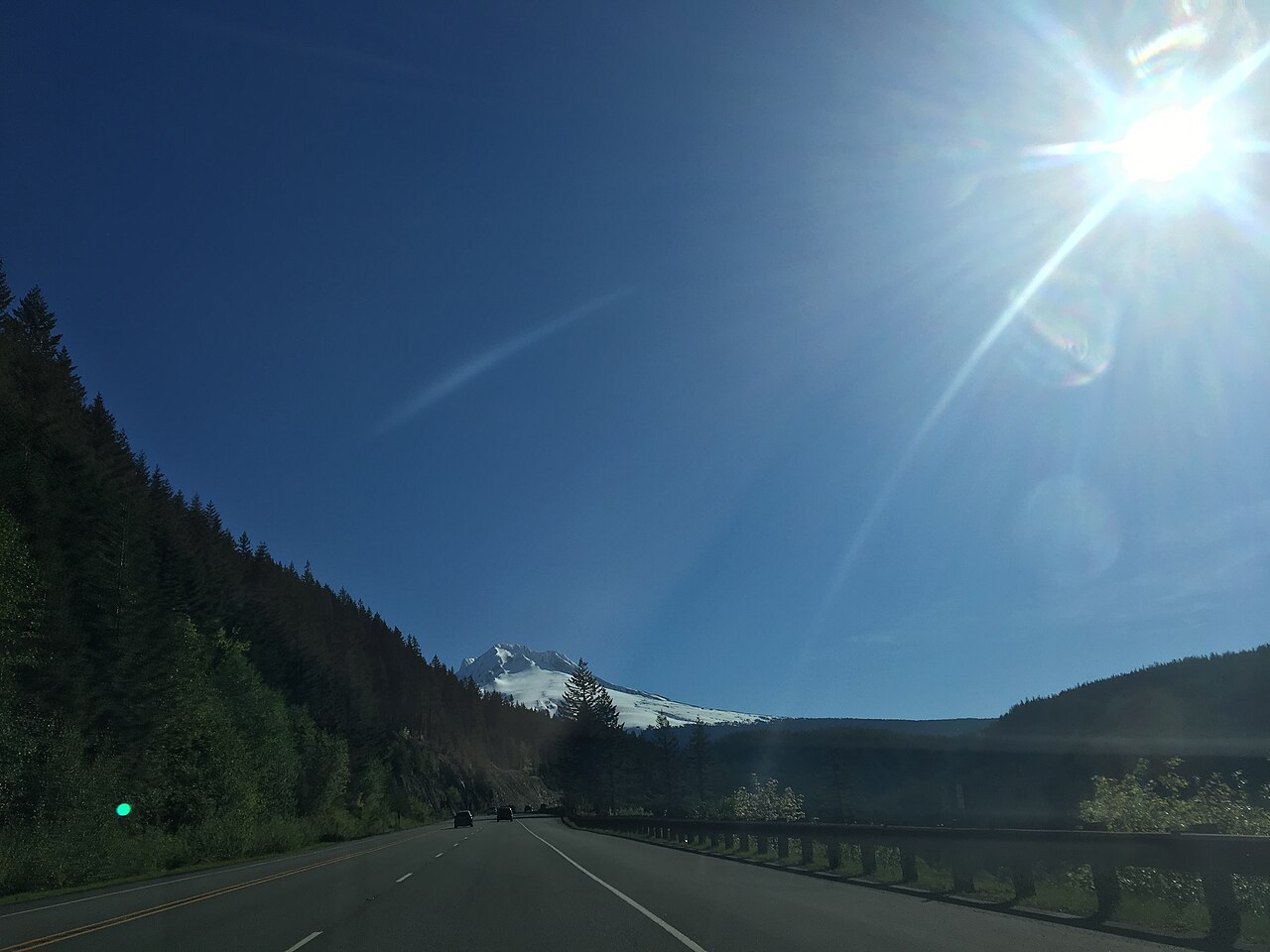
Mount Hood rises above US-26 near Government Camp, the high point of the Mt. Hood Highway that truckers cross at roughly 3,950 feet.
Mount Hood rises above US-26 near Government Camp, the high point of the Mt. Hood Highway that truckers cross at roughly 3,950 feet.Kingofthedead (Wikimedia Commons) · CC BY-SA
00 Live conditions
No live data
No live condition feed for this pass right now. Check the state DOT or 511 before you climb.
01 Overview

Government Camp sits at the base of Mount Hood's south side, right on U.S. Route 26 near where the highway meets Oregon Route 35. It is the highest community on the mountain. Wikipedia puts the elevation at about 3,891 ft, while local tourism sources round it up toward 4,000 ft, so call it roughly 3,900 ft. The highway here is the Mount Hood Highway, a 96.74-mile run marked as US-26 from Portland out to the mountain and as OR-35 the rest of the way to Hood River. It strings together Portland, Gresham, Sandy, Welches, Rhododendron, Government Camp, and Hood River.

Truckers run this road because it is the main freight and commuter route from the Portland metro over the south flank of the Cascades toward Central Oregon, continuing east toward Madras and Bend. It is also the access road to the Mount Hood ski areas, which is part of why it backs up. The relevant summit on the highway is Barlow Pass at 4,161 ft, with Government Camp sitting just below the Barlow Pass approach. Bennett Pass, over on OR-35 toward Hood River, climbs higher at 4,647 ft.

The climb west of Government Camp is the Laurel Hill grade, steep and curving and known for rockfall and crashes. ODOT documented a 20-mile backup from Welches to Government Camp with 2-plus-hour delays during one winter event. One caveat worth stating plainly: a published grade percentage for the US-26 mainline Laurel Hill climb is not something we could verify from ODOT. A figure of 6.7% over 5.4 miles floats around online, but that number describes the spur road up to Timberline Lodge, not the highway, so do not use it for US-26.

  • Government Camp is the highest community on Mount Hood, on the south side directly on US-26 near the OR-35 junction (Wikipedia, Government Camp, Oregon)
  • Elevation is about 3,891 ft per Wikipedia; tourism sources round to roughly 4,000 ft (Wikipedia, Government Camp, Oregon)
  • The highway summit nearby is Barlow Pass at 4,161 ft; Bennett Pass on OR-35 reaches 4,647 ft (Wikipedia, Mount Hood Highway)
  • The Mount Hood Highway runs 96.74 miles total, US-26 from Portland to the mountain then OR-35 to Hood River (Wikipedia, Mount Hood Highway)
  • US-26 is the freight and commuter route from Portland over the Cascades toward Madras and Bend, and the access road to the ski areas
  • Government Camp averages about 232.5 inches of snow a year, heaviest December through February (NOAA NCEI 1991-2020 normals via Current Results)
  • Studded tires are legal in Oregon from Nov 1 through Mar 31 (ODOT TripCheck, Oregon Chain Law)
02 Chain controls & closures

Traction tires and chains are required on US-26 and OR-35 in winter whenever ODOT posts them. There is no fixed calendar for it. Studded tires are legal in Oregon from November 1 through March 31. ODOT runs through escalating levels: a carry requirement (chains or traction tires must be on the vehicle, correct size), a use requirement where chains go on, and at the top a conditional closure, the most restrictive level, where chains are required on all vehicles and ODOT or OSP direct traffic on site. There is no scheduled seasonal closure of the road itself. ODOT keeps US-26 plowed and open year-round, so the only thing that "closes" on a date is the chain requirement when the posting comes down after conditions improve. Closures of the road are event-driven, caused by crashes or severe weather, not by the calendar.

03 Notable hazards
Hazard

Heavy snow and snow-packed roads

Government Camp averages about 232.5 inches of snow a year (NOAA NCEI 1991-2020 normals via Current Results), with December near 51.6 in, January 48.8 in, and February 39.5 in. Conditions down at Sandy or Hood River can be far milder than what you hit at the top, so do not judge the mountain by the valley.

Hazard

Ice on the curves

Several serious crashes here tie back to ice and poor road conditions. In the February 25, 2023 double-fatal near milepost 59, OSP called poor road conditions a significant contributor when a Subaru spun across the centerline into an ODOT snowplow.

Hazard

The Laurel Hill grade west of Government Camp

Steep and curving, long known as hazardous. A runaway truck escape ramp sits on this grade near Map Curve, in place since the late 1970s, climbing as steep as about 40% with loose gravel to stop a runaway. A verified mainline grade percentage from ODOT is not available, so plan for a real descent and check your brakes.

Hazard

Rockfall near Map Curve

The slopes between Kiwanis Camp Road and Mirror Lake, the Map Curve or Silent Rock area, dropped rock onto US-26 and caused repeated crashes and vehicle damage. ODOT cut the slope back about 40 ft to mitigate it.

Hazard

Crossover crashes and sudden backups

The corridor has a history of severe head-on crossover crashes, which is why ODOT installed concrete median barrier on the segment east of Rhododendron. Congestion is its own hazard: ODOT documented a 20-mile backup from Welches to Government Camp with 2-plus-hour delays in one winter event, and shoulder-parked or abandoned vehicles get towed because they block the plows.

04 History

The place got its name in 1849. U.S. Army troops, the Regiment of Mounted Riflemen marching from Fort Leavenworth toward Fort Vancouver, abandoned wagons and supplies here during a brutal late-season crossing of the Barlow Road. It became known as the government camp on Still Creek, and the name stuck. The Sandy-to-Barlow-Pass portion of today's US-26 follows the land route of the historic Oregon Trail and Barlow Road, and Laurel Hill's roughly 60% "chute" was the worst wagon section on the whole crossing. The runaway truck escape ramp west of Government Camp, near Map Curve, dates to the late 1970s.

ODOT spent years rebuilding this stretch for safety. In fall 2016 it wrapped the US-26 Mt. Hood Safety Project east of Rhododendron: about 1,400 ft of extended downhill passing lane, rockfall slopes cut back roughly 40 ft at Map Curve, and work aimed at the crossover crashes that had been killing and injuring people. The job used 51,000 lb of explosives and moved 317,804 cubic yards of material, with completion marked on October 28, 2016. The corridor's crash history kept making news after that. On February 25, 2023, a double-fatal crash near milepost 59 sent a Subaru across the centerline into an ODOT snowplow, OSP cited poor road conditions as a significant contributor, and the road stayed closed about six hours.

05 FAQ
Do I need chains to drive US-26 over Mount Hood in winter?
When the signs are posted, yes. Trucks over 10,000 lb GVW have to use chains and cannot swap in traction tires instead. Lighter vehicles may carry or use traction tires depending on the posted level. Check TripCheck or 511 before you roll. (ODOT Commerce & Compliance Division; ODOT TripCheck, Oregon Chain Law.)
How many chains does a semi need on US-26?
Single-drive axle: chains on two tires on each side of the drive axle. Tandem-drive axle: chains on two tires on each side of the primary drive axle, plus chains on towed units as posted. (ODOT Commerce & Compliance Division.)
What's the penalty if I don't chain up?
Ignoring the chain or traction signs is a Class C traffic infraction. A commercial driver who fails to both carry and use the required chains or traction tires can face a Class A traffic violation. (ODOT Commerce & Compliance Division; ODOT bulletin.)
Does US-26 close over Mt. Hood in winter?
There is no scheduled seasonal closure. ODOT plows it and keeps it open year-round. What closes the road is unscheduled: crashes and severe weather can shut it for several hours, and ODOT can impose a conditional closure that requires chains on all vehicles. The February 2023 snowplow crash closed it about six hours. (ODOT bulletin; news closures, February 2022 and February 2023.)
Where can I chain up safely?
Use a designated chain-up area, not the highway shoulder. Shoulder-parked vehicles get towed because they block the plows. The exact ODOT chain-up names and mileposts are best confirmed on TripCheck before you go; a Rhododendron-area pullout on the climb is commonly used. (ODOT bulletin.)
How much snow does Government Camp get?
About 232.5 inches a year on the 1991-2020 normals, heaviest from December through February. Remember that Sandy or Hood River can be far milder than Government Camp, so the valley reading will not tell you what the top is doing. (NOAA NCEI data via Current Results; ODOT bulletin.)
06 Related routes

Government Camp (Mt Hood) on the live map

See conditions, incidents, and weather around Government Camp (Mt Hood) in real time.

Open Live Map