Interstate 10 is the southernmost coast-to-coast interstate in the United States, running 2,460 miles from the Pacific at Santa Monica, California to the Atlantic at Jacksonville, Florida. It is the warm-weather cross-country alternative to I-80 and I-90, the route most snowbird drivers and a large share of LTL freight take to avoid Sierra and Rocky Mountain weather. The corridor crosses eight states and threads four major metropolitan areas (Los Angeles, Phoenix, San Antonio, and Houston) plus New Orleans.
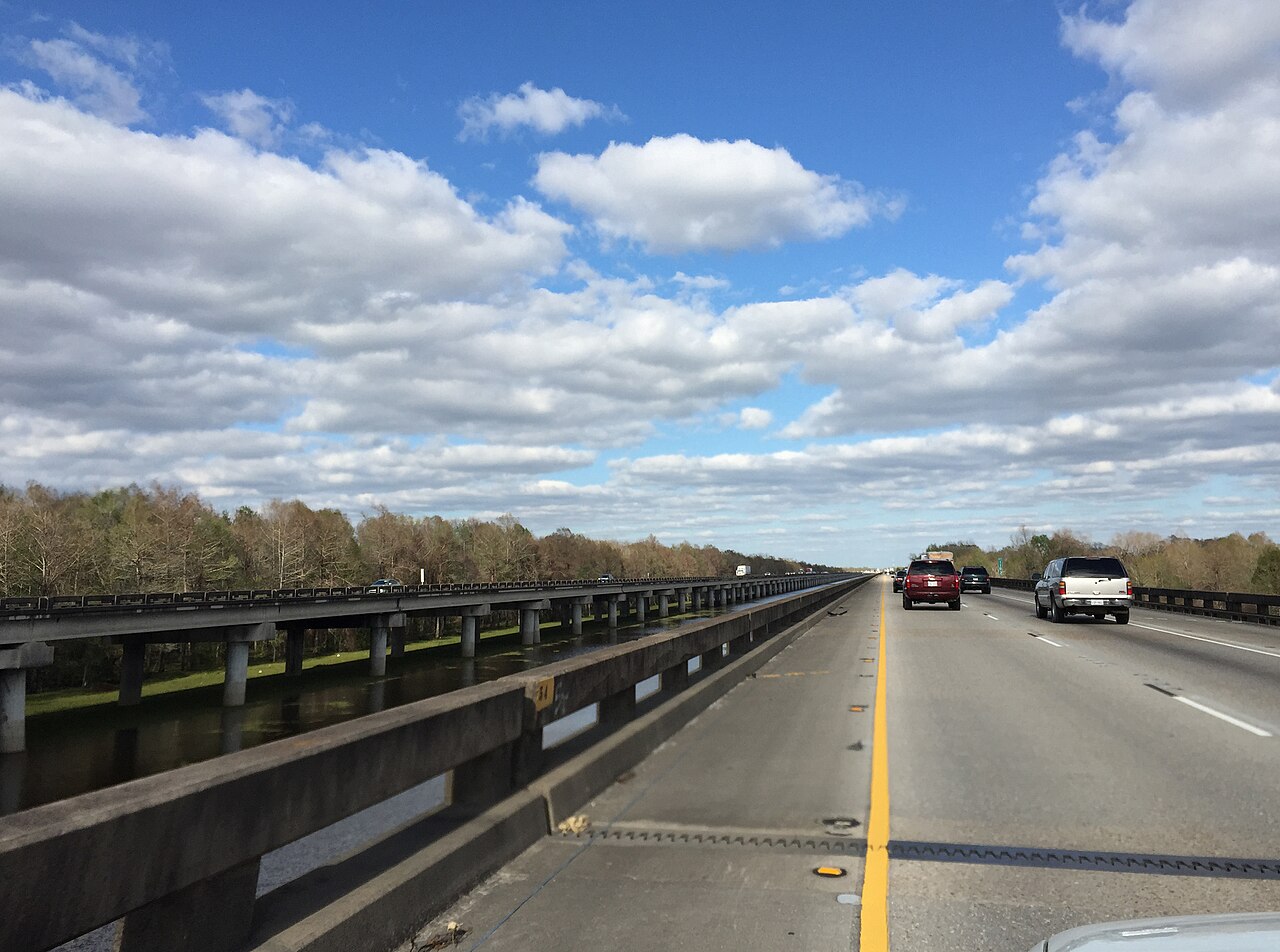
Geographically I-10 climbs from sea level at Santa Monica to about 4,975 ft just east of Las Cruces, NM, descends across the Rio Grande, then rolls flat for nearly 1,300 miles across the Texas Hill Country, the Louisiana bayous, and the Gulf Coast. Long stretches of West Texas have rest areas spaced 60-100 miles apart, and the Continental Divide crossing near Lordsburg, NM is one of the lowest on any interstate. The Atchafalaya Basin Bridge in Louisiana is the second-longest bridge in the United States at 18.2 miles.
I-10 is also one of the most weather-sensitive corridors in the South. Hurricane evacuations route huge convoys onto contraflow westbound from New Orleans and Houston, fog over the Atchafalaya is a recurring crash hazard, and dust storms (haboobs) close the Phoenix-Tucson segment several times a year. For commercial drivers, the route is densely covered by truck stops at every major exit between Tucson and Mobile.
- Southernmost coast-to-coast interstate in the United States
- Crosses eight states: CA, AZ, NM, TX, LA, MS, AL, FL
- Texas alone accounts for 880 miles, over a third of the route
- Atchafalaya Basin Bridge in Louisiana is 18.2 miles long, the second-longest US bridge
- Designated hurricane evacuation contraflow route from New Orleans west to Houston
- Lowest Continental Divide crossing on any US interstate (~4,520 ft near Lordsburg, NM)
- Highest point is just east of Las Cruces, NM at approximately 4,975 ft