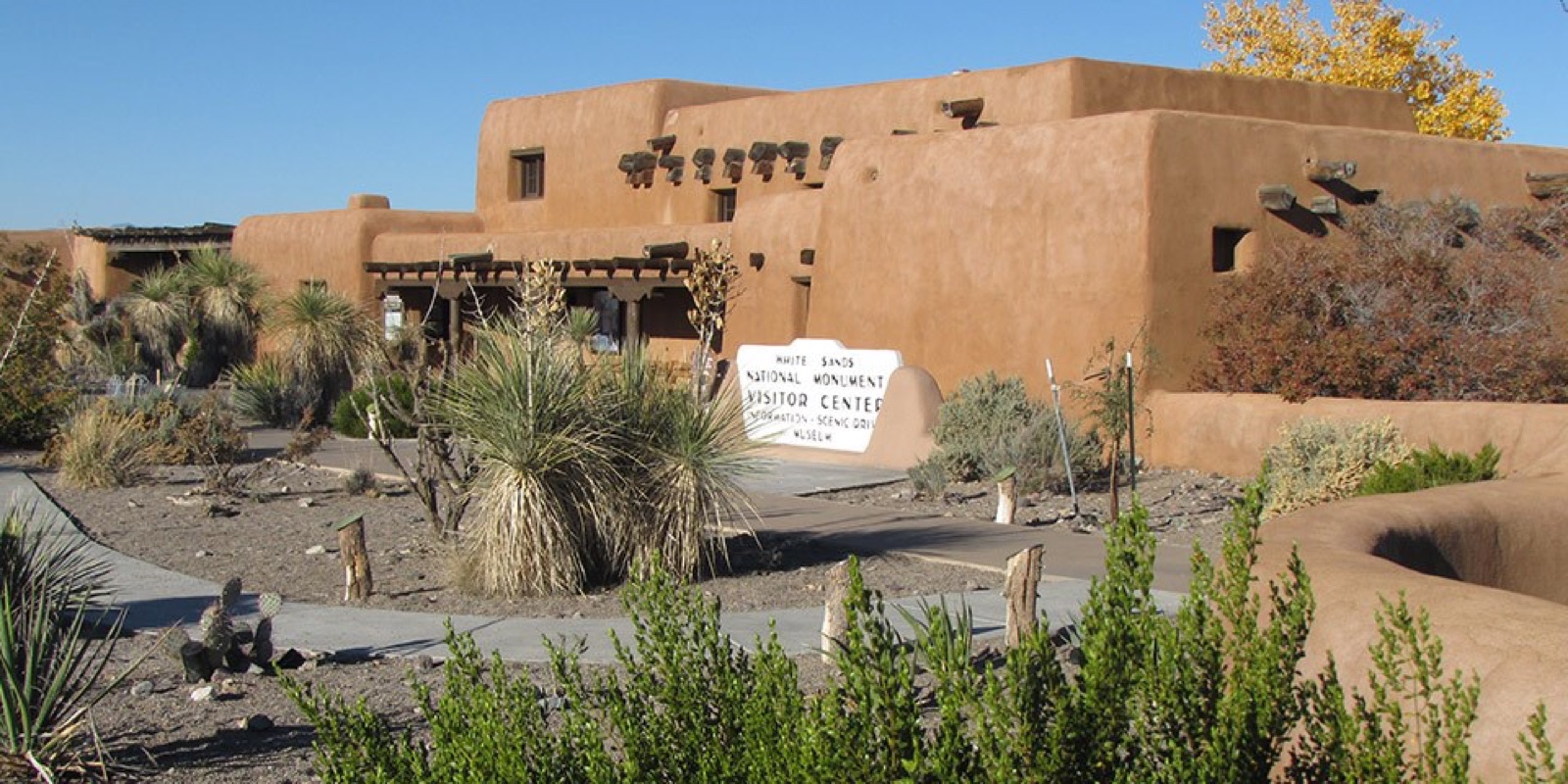
White Sands is the largest gypsum dune field on earth, 275 square miles of brilliant white sand that, unlike most desert dunes, is composed of crystallized calcium sulfate rather than quartz. The dunes are gentle, walkable, and famously cool to the touch even in summer heat because gypsum reflects rather than absorbs sunlight. Designated a national monument in 1933 and re-designated as a national park in December 2019 (the 62nd in the system), the park sits inside the larger White Sands Missile Range in the Tularosa Basin. From I-25 in Las Cruces, take Exit 6 onto US-70 east; the visitor center is 55 paved miles east, between the Organ and San Andres mountains. The 8-mile Dunes Drive into the heart of the dune field is the park's signature road. White Sands also closes for missile-test events on US-70, typically a few hours, a handful of times per month.
- Largest gypsum dune field on earth (275 sq mi)
- Re-designated from monument to national park in December 2019 (62nd US national park)
- Inside the active White Sands Missile Range, periodic closures for missile tests
- About 600,000 visitors per year
- Gypsum reflects sunlight, keeping the sand cool to the touch even in summer