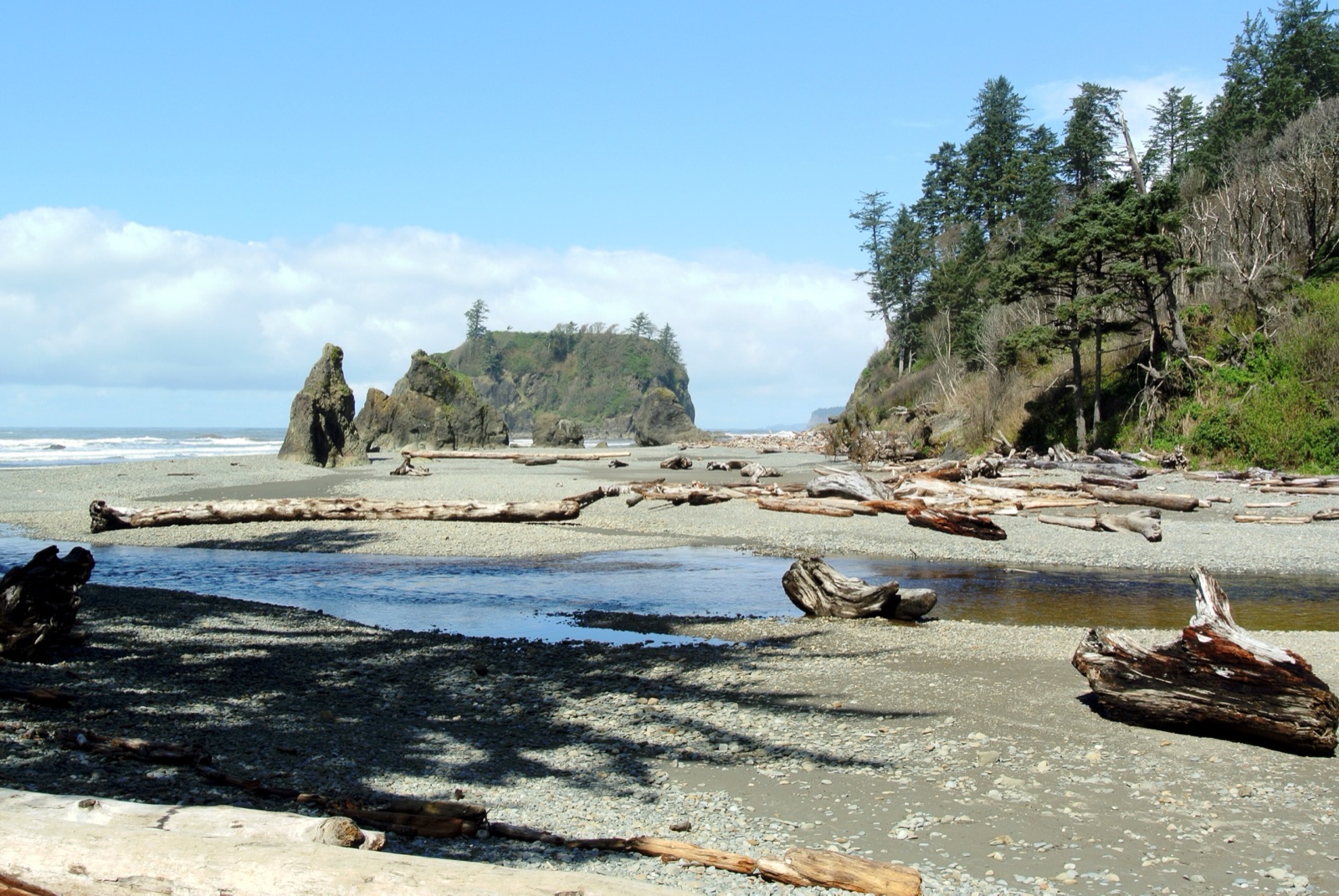
Olympic is the rare park that wraps three different ecosystems into a single 922,000-acre boundary: a temperate Pacific rainforest on the west side (Hoh, Quinault, and Queets valleys), a 73-mile wilderness coast along the Pacific, and a glaciated mountain core topped by Mount Olympus (7,980 ft) at its center. There is no road that crosses the park, instead a ring of spur roads off US-101 reaches each section, and visitors typically pick two or three to combine over a weekend. From I-5 the standard access is Exit 104 in Olympia, then 83 miles up US-101 to Port Angeles for Hurricane Ridge, or further west for the Hoh Rainforest, Lake Crescent, and the Pacific coast. Olympic was designated a national park in 1938 and a UNESCO Biosphere Reserve and World Heritage Site shortly after.
- Designated a UNESCO Biosphere Reserve and a World Heritage Site
- 73 miles of protected Pacific coastline, the longest undeveloped coast in the contiguous US
- Hoh Rainforest receives 140-170 inches of rain a year, more than any other forest in the lower 48
- No road crosses the park, spur roads off US-101 access individual valleys
- Mount Olympus (7,980 ft) is the highest peak; over 250 glaciers cover the interior