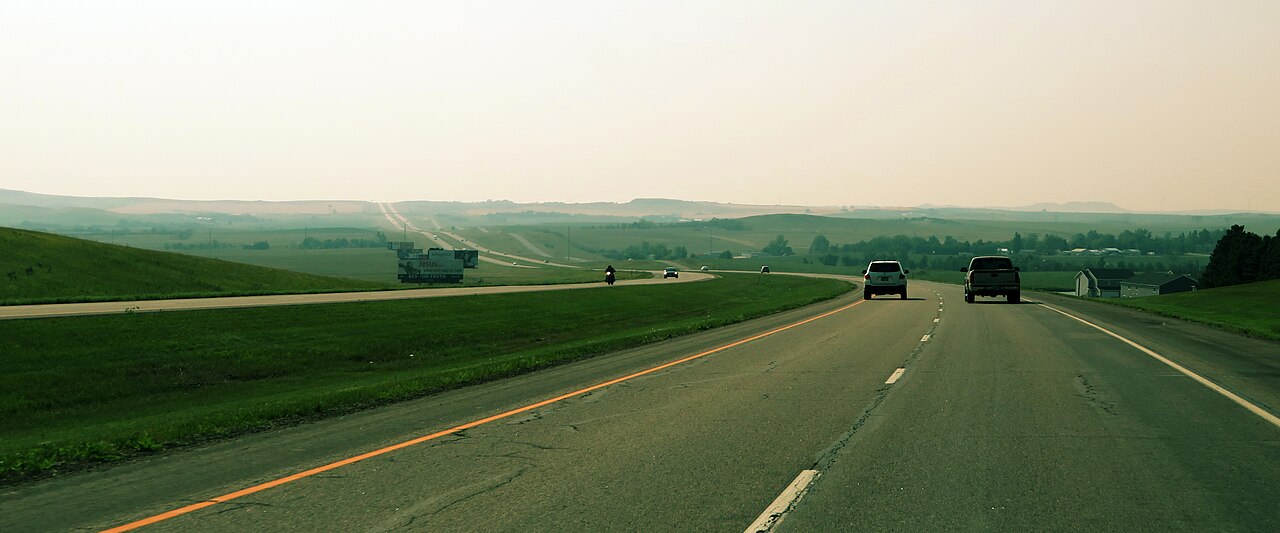
Interstate 94 runs 1,585 miles from Billings, Montana to Port Huron, Michigan, where it ends at the Blue Water Bridge into Sarnia, Ontario. It is the northernmost coast-bound east-west interstate, paralleling I-90 across Montana, North Dakota, and the upper Midwest before taking its own path across Wisconsin, Illinois, Indiana, and Michigan.
For freight, I-94 is the principal Detroit-to-Northwest corridor, the main route for Bakken oil-patch traffic in North Dakota, and the main Twin Cities-to-Chicago intermodal route. The Detroit and Chicago metro segments rank among the worst truck bottlenecks in the country on ATRI's 2024 Top 100 list, including the Chicago I-90/I-94 interchanges (where I-94 is concurrent with I-90) and the Detroit I-94/I-75 interchange.
Geographically I-94 is mostly flat, with the only significant climbs through the Badlands of western North Dakota and the rolling country of southern Wisconsin. Weather hazards are dominated by ground blizzards across the northern Plains, lake-effect snow on the Indiana-Michigan border, and occasional severe weather across Wisconsin and Minnesota.
- Northernmost coast-bound east-west interstate
- Crosses seven states: MT, ND, MN, WI, IL, IN, MI
- Main Bakken oil-patch freight corridor across North Dakota
- Concurrent with I-90 across the Dan Ryan in Chicago
- Ends at the Blue Water Bridge in Port Huron, one of the top US-Canada truck crossings (BTS)
- Crosses the Mississippi River at the Twin Cities
- Detroit segment includes the I-94/I-75 stack, among the busiest in the Midwest