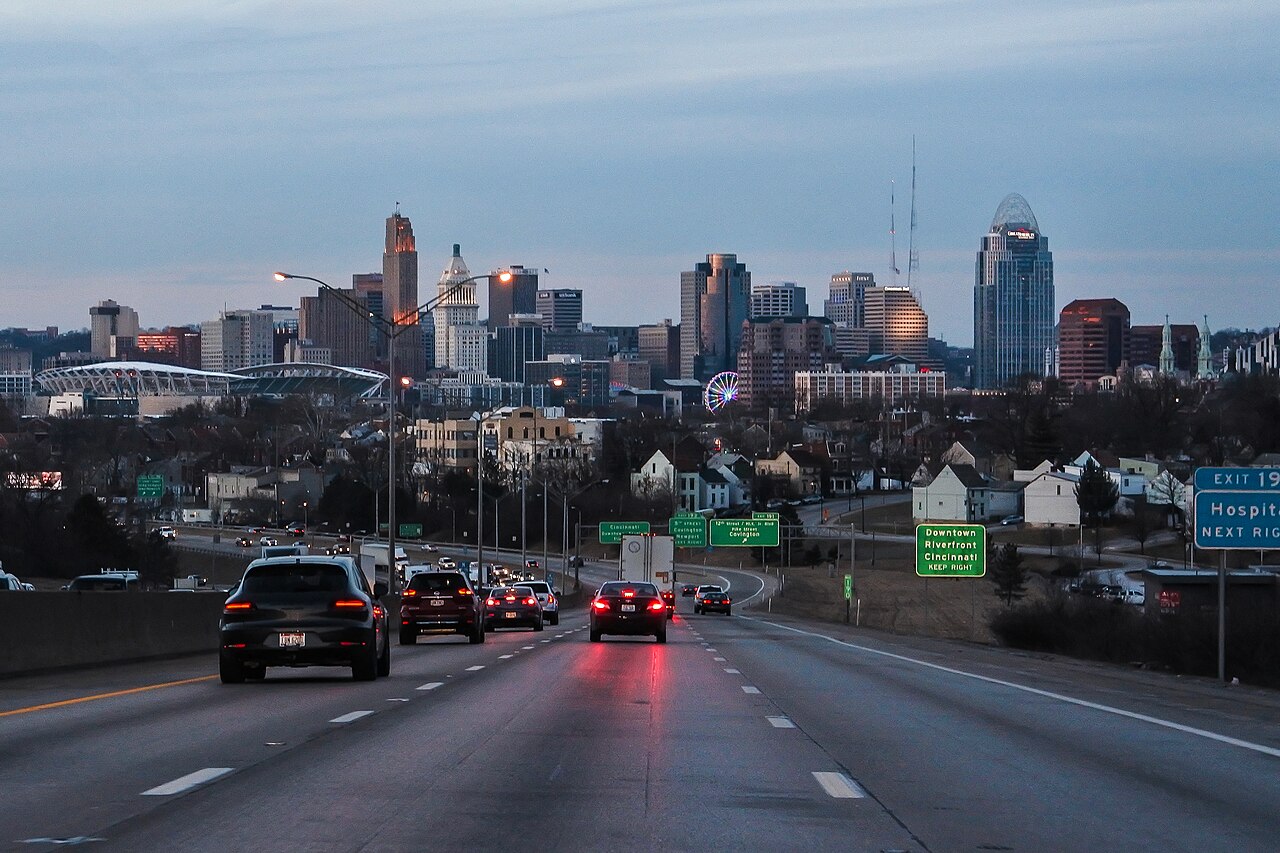
Interstate 71 runs 345 miles from Louisville, Kentucky to Cleveland, Ohio, and is the primary northeast diagonal across Kentucky and Ohio. It connects three of the four major Ohio metro areas (Cincinnati, Columbus, Cleveland) along with Louisville and the Kentucky Bluegrass region. I-71 ranks high for truck volume per mile in Ohio's metros: by average combination truck AADTT per mile it is second only to I-70 in Columbus and leads Cincinnati's roadways (with I-74 and I-75) on the same measure (Mid-America Freight Coalition, Ohio DOT data). Truck density is heaviest through the Cincinnati and Columbus metros, not the Cleveland end, where I-80 and I-480 carry the most combination truck miles.
For freight, I-71 carries heavy intra-Ohio freight, linking the Cincinnati and Louisville freight hubs to the Columbus distribution centers and Cleveland-area plants. Auto manufacturing in the region adds freight to the corridor: Honda's Marysville auto plant sits northwest of Columbus (served mainly by US-33), and Ford's Cleveland Engine plant in Brook Park is near the Cleveland end.
Geographically I-71 is mostly rolling, with no major climbs. The route crosses the Ohio River at Louisville on the Kennedy / Lincoln bridges (jointly with I-65) and again uses the Brent Spence Bridge corridor at Cincinnati. Weather hazards are dominated by lake-effect snow at the Cleveland terminus, occasional ice events in central Ohio, and severe weather across Kentucky in spring.
- Crosses two states: KY, OH
- Connects Louisville, Cincinnati, Columbus, and Cleveland
- Concurrent with I-65 across the Ohio River at Louisville (RiverLink tolled)
- Concurrent with I-75 across the Brent Spence Bridge at Cincinnati
- Second-highest combination truck volume per mile in Columbus (behind I-70); top tier in Cincinnati (Ohio DOT data)
- Crosses the Ohio River twice (at Louisville and again with I-75 at Cincinnati)
- Cleveland terminus connects to I-90 at the lakefront