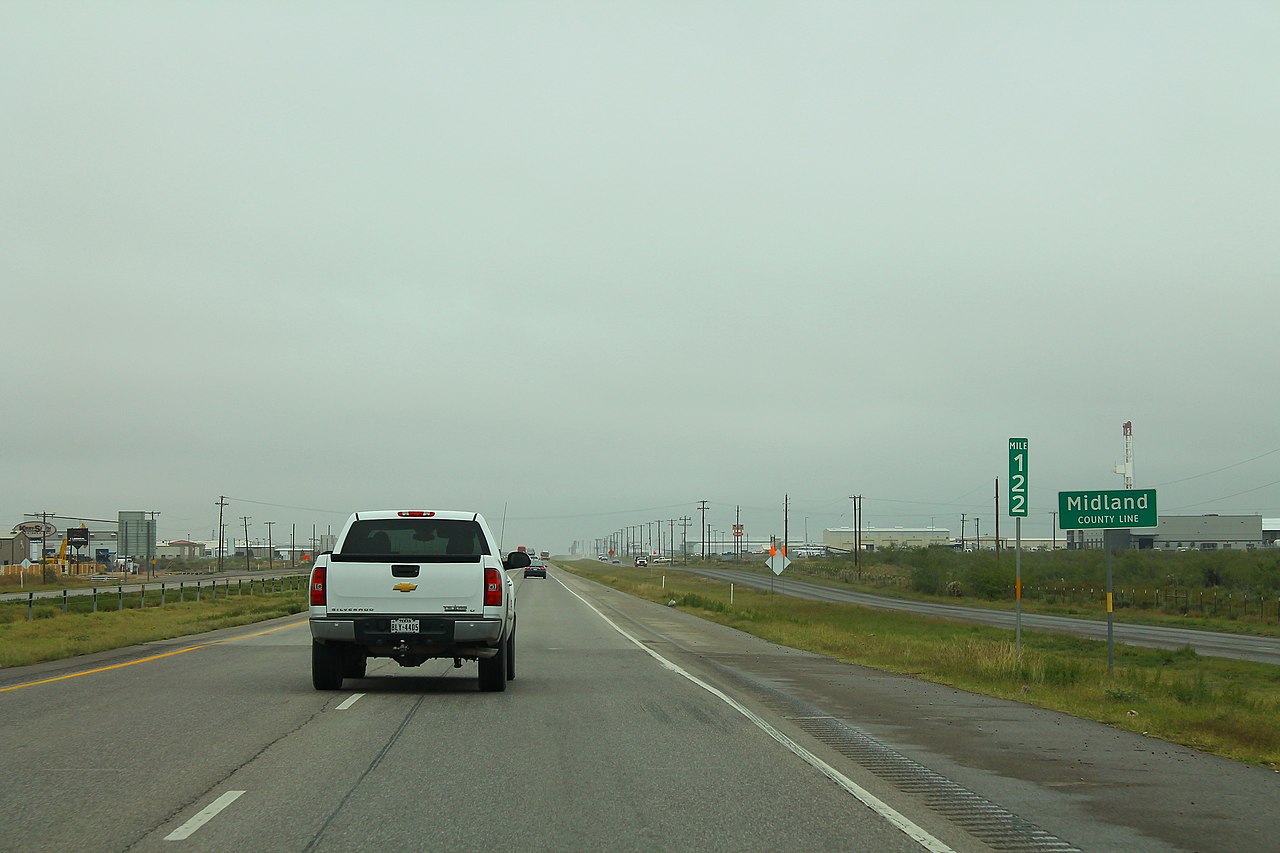
Interstate 20 runs 1,539 miles from Kent, Texas (where it splits off from I-10 in the Davis Mountains) to Florence, South Carolina, where it terminates at I-95. It is the secondary southern east-west corridor, paralleling I-10 about 200 miles to the north and serving the major Sun Belt cities of Dallas-Fort Worth, Shreveport, Jackson, Birmingham, Atlanta, Augusta, and Columbia.
For freight, I-20 is the preferred long-haul route between the Texas oil patch and the southeastern US, particularly for petroleum products, lumber, and automotive supplies feeding the Mercedes, Hyundai, Honda, and BMW assembly plants in Alabama, Georgia, and South Carolina. Truck volume is heaviest in the metro stretches: the I-20 at I-285 (West) interchange in Atlanta ranks among the nation's worst truck bottlenecks (ATRI ranked it #6 in 2024, and #10 in 2025), making it the busiest congestion point on the whole corridor.
The terrain is mostly rolling. The Texas Hill Country and the southern Appalachian foothills are the only significant climbs. Weather hazards skew toward severe thunderstorms, tornadoes (Dixie Alley runs right through the central segment), and occasional ice events from late January through February. The Atlanta Perimeter (I-285) intersection is one of the most congested truck interchanges on any US interstate.
- Begins at I-10 in Kent, TX and ends at I-95 in Florence, SC
- Crosses six states: TX, LA, MS, AL, GA, SC
- Carries the bulk of Texas-to-Southeast freight
- Atlanta segment (with I-285) is among the most congested in the South
- Atlanta has three of ATRI's 2024 top 10 national truck bottlenecks: I-285 at I-85 North (#5), I-20 at I-285 West (#6), I-285 at SR 400 (#9)
- Concurrent with I-59 across most of central Alabama
- Crosses the Mississippi River at Vicksburg
- Designated hurricane evacuation route from coastal LA and MS